-1240x898.jpg)
Yusuke Nakahara and His Age: Art Front Gallery Selection
Current
Thursday26 March - Saturday30 May 2026
Art Front Gallery is pleased to present the exhibition “Yusuke Nakahara and His Era: Art Front Gallery Selection.” Yusuke Nakahara, who opened new horizons in postwar Japanese art criticism, passed away in March 2011, just before the Great Eastern Japan Earthquake . In March 2026, the monumental eleven-volume series “Selected Writings on Art Criticism by Yusuke Nakahara,” which compiles his vast body of work, was completed.
Marking 15 years since Nakahara’s passing, this exhibition presents works by artists featured in the series who have close ties to Art Front Gallery.
Marking 15 years since Nakahara’s passing, this exhibition presents works by artists featured in the series who have close ties to Art Front Gallery.
| Opening hours | Tue~Sat, Public holidays 11:00AM~5:00PM |
| Closed days | Sun and Mon (3 and 4 May will be opened) |
Featured Artists
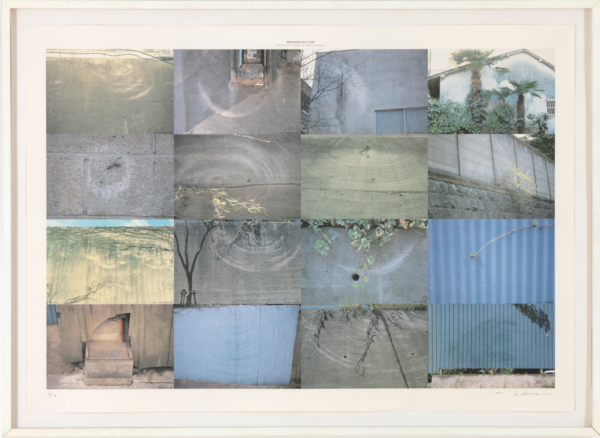
Syusaku Akasegawa
Genpei Akasegawa (1837-2014), together with Jiro Takamatsu and Natsuyuki Nakanishi, was active in the collective Hi-Red Center. Yusuke Nakahara supported their activities as an advisor and, as a critic, continued to work alongside artists of the same generation. In the so-called “Thousand-Yen Note Trial,” in which Akasegawa was prosecuted for violating the law against the imitation of currency and securities over his work Model 1,000-Yen Note, Nakahara appeared in court as one of the special defense counsels. There, he presented a logical defense, arguing that this act of expression was rooted in the very essence of art. In an essay published in the September 1967 issue of Bijutsu Techo, Nakahara closely examined the symbolic progression of the trial, reflecting in depth on the proposition: “Can art be judged?”
Reference: Vol 4 “From the Myth of Seeing: The Autonomy of the Idea and the Transformation of Art.”
Reference: Vol 4 “From the Myth of Seeing: The Autonomy of the Idea and the Transformation of Art.”

Noe Aoki
Noe Aoki (1958-) is an artist who creates her works by repeatedly cutting out fundamental shapes such as circles from industrial steel plates and welding them together. At the 2009 Echigo-Tsumari Art Triennale, she produced Particles of the Sky, an installation in which countless welded rings connected both the interior and exterior of a storehouse that had been in use for nearly 80 years. Observing this work—where the iron ring extended not only inside the storehouse but also across its outer walls—Yusuke Nakahara remarked that the storehouse itself, as an exhibition space, had become inseparable from the artwork, transforming the entire building into a work of art. In a text included in the 2009 Echigo-Tsumari Art Triennale: Record Collection, Nakahara introduced the term “de-artification” (datsu-geijutsu) in reference to works that unfold within vacant houses and abandoned buildings used as exhibition spaces.
Reference: Vol. 10 “Art in Society – Expanding Exhibition Spaces.”
Reference: Vol. 10 “Art in Society – Expanding Exhibition Spaces.”
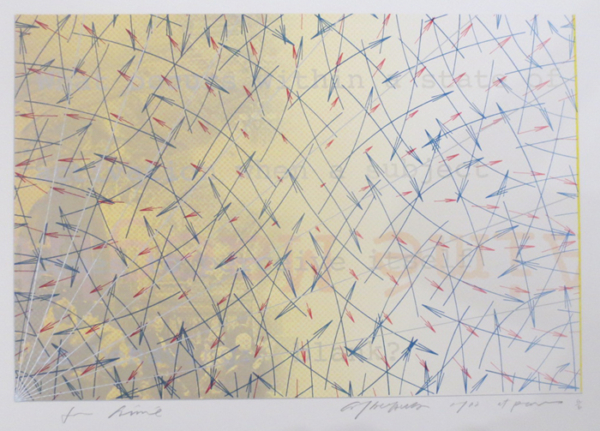
Syusaku Arakawa
Shusaku Arakawa (1936-2010), who spent his childhood during wartime, made his debut in the postwar art scene by exhibiting at the Yomiuri Indépendant Exhibition in 1957. In 1960, he participated in the formation of the Neo-Dada Organizers. In his early period, Arakawa produced sculptural works such as the “Coffin” series, composed of wooden boxes reminiscent of coffins and blocks of cement. Yusuke Nakahara discussed these works as embodying an “aesthetics of nonsense.” After moving to the United States in 1961, Arakawa developed a series known as “diagram paintings,” in which he incorporated geometric shapes, text, and arrows into the pictorial surface, presenting what he described as “paintings about painting.” In his later years, together with his partner Madeline Gins, he proposed the concept of “Reversible Destiny” as an attempt to overcome death, and went on to create architectural works such as Site of Reversible Destiny Yoro and Reversible Destiny Lofts Mitaka.
Reference: Vol. 3 “The Course of the Avant-Garde – The Era of the Indépendant Exhibition and the Aesthetics of Nonsense.”
Reference: Vol. 3 “The Course of the Avant-Garde – The Era of the Indépendant Exhibition and the Aesthetics of Nonsense.”
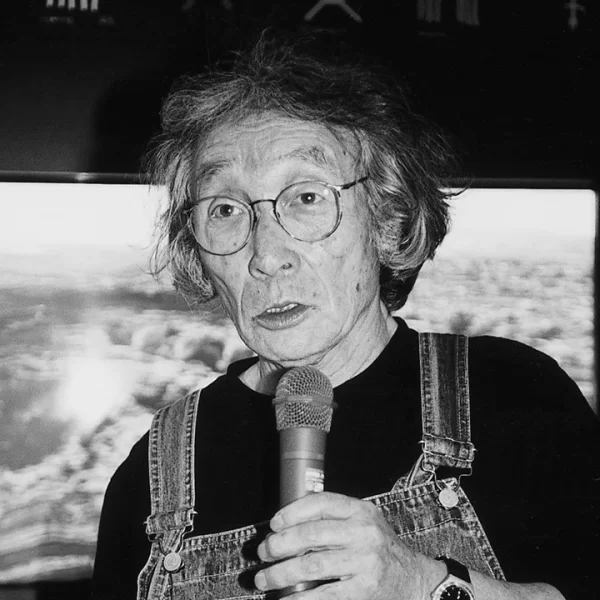
Kiyoshi Awazu
Kiyoshi Awazu (1929-2009), a leading figure in postwar Japanese graphic design, collaborated with Yusuke Nakahara in a wide range of contexts. In the major publication Kiyoshi Awazu: Complete Works (3 vols.), which comprehensively surveys Awazu’s graphic and painterly works from his early period through his peak years, Nakahara served as editor. In addition, in the magazine Quarterly Film, first launched in 1968, both Awazu and Nakahara were listed among the editorial board members alongside figures such as Toru Takemitsu and Toshio Matsumoto, engaging in discussions that traversed the boundaries between film, contemporary art, and design. Nakahara also provided a chronological overview of Awazu’s multifaceted practice—spanning art, cinema, theater, and beyond through the medium of graphic design—in his essay “Kiyoshi Awazu’s Posters” (1978).
Reference: Vol. 11 “Monographs – Western Europe, Eastern Europe, Russia, North and South America, East Asia, and Japan.”
Reference: Vol. 11 “Monographs – Western Europe, Eastern Europe, Russia, North and South America, East Asia, and Japan.”
Ay-O
Ay-O (1931-) , born in Ibaraki Prefecture, joined the Democrat Art Association in the 1950s together with artists such as Masuo Ikeda, gaining attention for his brightly colored oil paintings. In 1958, he moved to New York, where he produced works that appealed to the human senses beyond the conventional boundaries of painting, including his Finger Boxes, in which viewers insert their fingers into holes in small boxes, as well as installations that incorporate the surrounding environment. He also participated in the international art movement Fluxus.From the mid-1960s onward, he established a distinctive style based on the spectrum of visible light (the gradation of the rainbow), and came to be known as the “Rainbow Artist.” When Ay-O departed for New York in 1958, Yusuke Nakahara supported his activities as one of the initiators of the “Ay-O Support Association for Travel to the United States.”
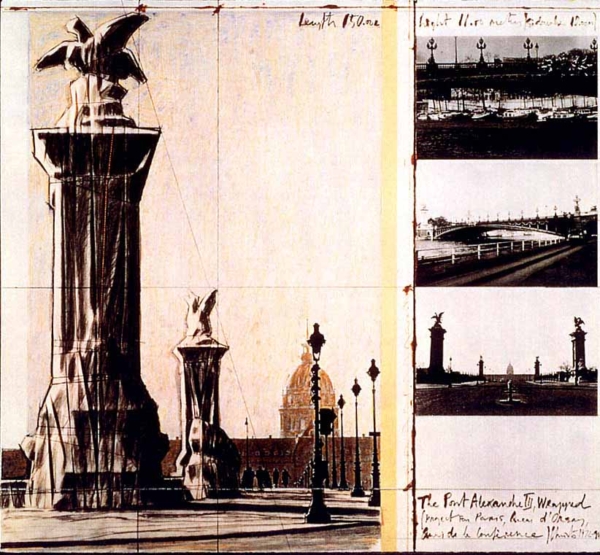
Christo & Janne-Claude
Christo (1935-2020) studied at the Academy of Fine Arts in Sofia and the Academy of Fine Arts Vienna before moving to Paris in 1958. In his early period, he created portrait paintings as well as works in which cans and industrial products were wrapped in fabric. Jeanne-Claude (1935-2009) studied Latin and philosophy at the University of Tunis, and met Christo in Paris in 1958. Together, they began working on projects in public space. In his book Christo: The Myth of Art Without Myth, Yusuke Nakahara examined how contemporary art, having lost the religious and traditional “myths” of the past, could establish new relationships with society and nature. The Umbrellas Project, realized in 1991 in Ibaraki, Japan, and California, involved the participation of Art Front Gallery. The gallery continues to handle Christo’s works, including drawings and lithographs.
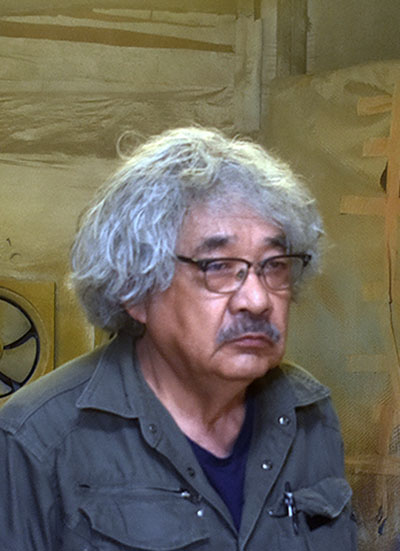
Toshikatsu Endo
Toshikatsu Endo (1950-) has, since the 1970s, created works using charred wood, water, earth, metal, and other materials, developing a sculptural practice centered on concepts such as “circularity” and “hollowness.” Through these works, he continues to explore the relationship between nature and human beings. Since 2003, he has participated in the Echigo-Tsumari Art Triennale, and remains actively active in presenting new works, including at events such as Minami-Hida Art Discovery (2024). Endo has remarked that when he saw the 10th Tokyo Biennale ‘Man and Matter’, curated by Yusuke Nakahara, in Aichi, something began to move within him. While, like the so-called Mono-ha artists, he initially sought to foreground materiality, his concerns gradually shifted toward pursuing the bodily sensations and narrative dimensions that lie behind matter.
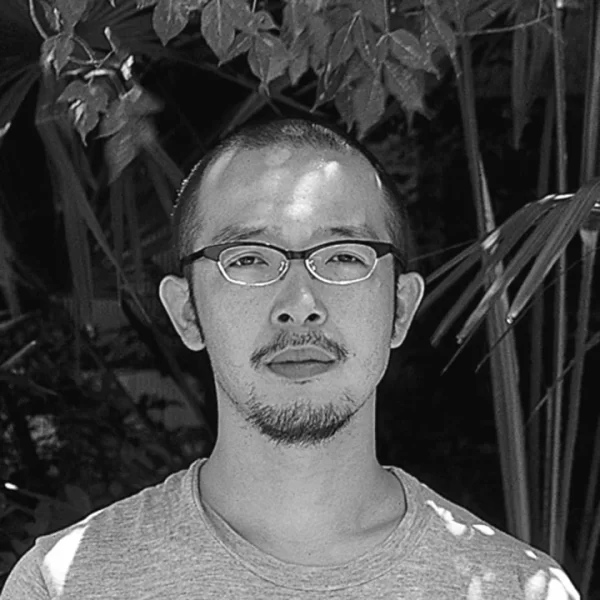
Kyotaro Hakamata
Kyotaro Hakamada (1963-) traveled to the United States in 1994 as an overseas research fellow of the Agency for Cultural Affairs Japan. In 1996, following his receipt of the Goto Memorial Cultural Award for emerging artists, he undertook further international research, staying in China, Tibet, Nepal, and other regions. In his early career, Hakamada’s work was characterized by the use of everyday materials such as FRP, plywood, and steel plates. In recent years, however, he has become widely known for his sculptural works composed of multiple layers of vividly colored acrylic panels. In the exhibition Kyotaro Hakamada: Blinking, held in 1993 at Hillside Gallery, Yusuke Nakahara contributed a text titled “The Open Form of Kyotaro Hakamada.”

Naoyoshi Hikosaka
Hisayoshi Hikosaka (1946-), while studying in the painting department at Tama Art University, co-founded in 1969 the Artists’ Joint-Struggle Council (Bijutsu-ka Kyoto Kaigi) together with figures such as Kosai Hori, Miyako Ishiuchi, Yasunao Tone, and Ryuji Miyamoto, participating in anti-establishment movements. From 1970, he initiated the Floor Event series, in which he poured large quantities of latex across his eight-tatami room and veranda at home, documenting the process as it dried. Emerging as a pioneer of Japanese conceptual art from the 1970s onward, Hikosaka has consistently pursued a practice that fundamentally questions the very institutional frameworks of artistic expression. Known for his critical stance toward “art as institution,” Hikosaka also examined the discourses established by earlier critics such as Yusuke Nakahara, at times seeking to challenge and move beyond them.
、雲肌麻紙、墨、ダーマトグラフ、岩絵の具-600x451.jpg)
Kosai Hori
Kosai Hori (1947-) began his artistic career in 1967, the same year he entered Tama Art University, by organizing the performance Self-Burial Ceremony with a group of peers. In the late 1960s, he participated in the student movement and became chair of the Artists’ Joint-Struggle Council (Bijutsu-ka Kyoto Kaigi), which sought to question the institutional framework of art, and he led student actions such as campus barricades. At the time, students who rejected the university’s official curriculum invited external intellectuals they trusted to give lectures on campus as part of independently organized courses. One of these invited lecturers was Yusuke Nakahara. Nakahara engaged on equal terms with the fundamental questions posed by Hori and his peers—namely, “What is expression?”
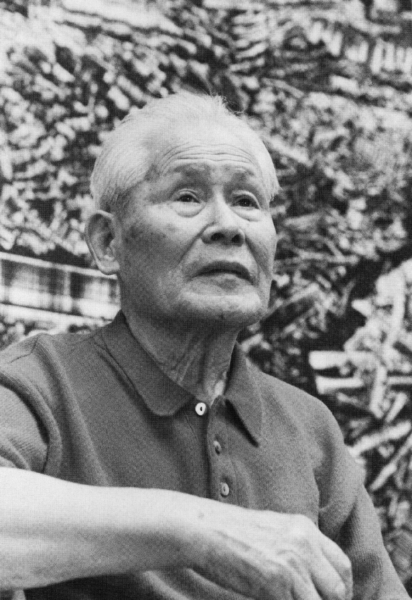
Arinori Ichihara
Arinori Ichihara (1910-2010), born in Tokushima and raised in Otaru, Hokkaido, was a printmaker who remained based in Otaru throughout his career. Art Front Gallery has long handled the sale of his print works. While working at the Otaru Regional Savings Bureau, he developed a distinctive printmaking technique using lithography and the corrosion of metal plates. At the age of 50, he made his solo exhibition debut at Tokyo Gallery. Yusuke Nakahara contributed a review of this 1960 exhibition, Arinori Ichihara Print Exhibition. While offering a certain level of praise for the smaller works, he was critical of the larger pieces, commenting that they showed “a strong tendency toward the reproduction of machines and iron pipes, falling into a kind of naturalism.”
Reference: Vol. 3 “The Course of the Avant-Garde – The Era of the Indépendant Exhibition and the Aesthetics of Nonsense.”
Reference: Vol. 3 “The Course of the Avant-Garde – The Era of the Indépendant Exhibition and the Aesthetics of Nonsense.”
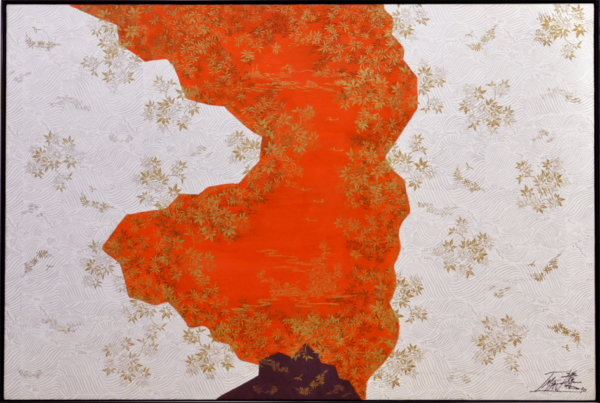
Toshimitsu Imai
For Yusuke Nakahara, Toshimitsu Imai was one of the artists who embodied the process by which postwar Japanese art connected to an international context. Based in Paris, Imai developed an abstract mode of expression in the wake of Art Informel, while forging a distinctive painterly language that was not merely derivative of Western art but incorporated a uniquely Japanese sensibility and sense of physicality. Nakahara focused on the way Imai’s works, despite their intense matière and bodily engagement, also contained a lyrical quality and an underlying Eastern sensibility. He regarded Imai’s practice as a concrete example demonstrating that Japanese art could enter into meaningful dialogue with the global art of its time.
Reference: Vol. 2 “A History of Modern Japanese Art – The Reception of Western Art and Its Course.”
Reference: Vol. 2 “A History of Modern Japanese Art – The Reception of Western Art and Its Course.”
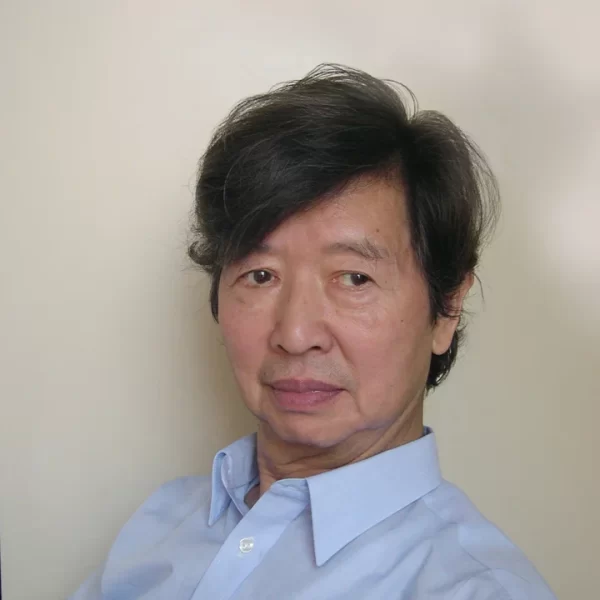
Yukihisa Isobe
Yukihisa Isobe (1936-) began producing prints in the 1950s and gained wide recognition in the 1960s for his relief works featuring repeated badge-like forms. After moving to New York in 1965, where he studied ecological planning, his practice underwent a major transformation. Following his return to Japan, Isobe conducted research into regional planning, positioning elements such as climate, geology, topography, water, soil, vegetation, and historical culture as resources that shape local environments. He has been deeply involved with the Echigo-Tsumari Art Triennale since its inception in 2000, and has continued to present new works in the Echigo-Tsumari region. Yusuke Nakahara visited the Triennale in 2000, 2003, and 2006, where he encountered Isobe’s works. Regarding "Where Has the River Gone?," which represents the former course of the Shinano River with yellow poles, Nakahara remarked on the striking “vivid contrast between the expansive green rice fields and the countless upright yellow rods that seem to stand in opposition to them.” He further observed that “through the de-functionalization of surveying techniques, it was transformed into a technique of visual art.”
Reference: Vol. 11 “Monographs – Western Europe, Eastern Europe, Russia, North and South America, East Asia, and Japan.”
Reference: Vol. 11 “Monographs – Western Europe, Eastern Europe, Russia, North and South America, East Asia, and Japan.”

Ilya & Emilia Kabakov
Ilya Kabakov (1933-2023) was born in 1933 in the former Soviet Union (present-day Ukraine). From the 1950s through the 1980s, he worked officially as an illustrator of children’s books, while simultaneously pursuing unofficial artistic activities under the Soviet regime. In the mid-1980s, he relocated abroad and gained international recognition for his “total installations,” which reconstruct scenes of everyday life in the former Soviet Union as spaces of memory. These works were presented at major international exhibitions such as the Venice Biennale and documenta. From 1989 onward, he collaborated with Emilia Kabakov (1945-), working jointly on projects aimed at activating human imagination. At his first solo exhibition in Japan, Ilya Kabakov: The Life and Creativity of Charles Rosenthal, held in 1999 at the Art Tower Mito, Kabakov engaged in a dialogue with Yusuke Nakahara on forms of expression that employ fictional narratives.
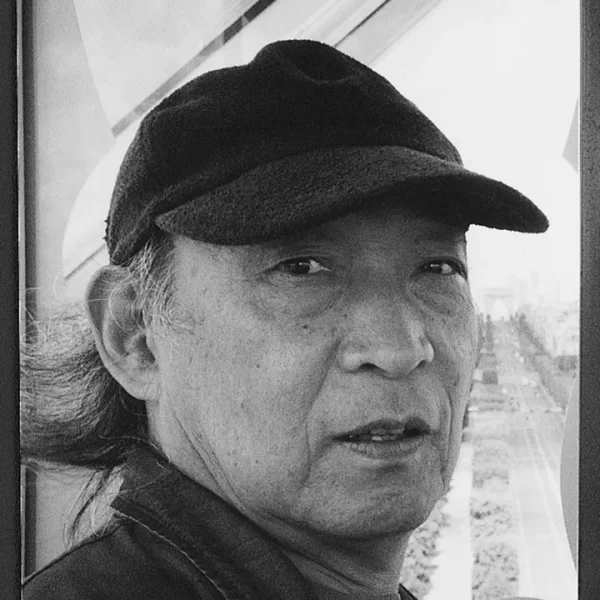
Tatsuo Kawaguchi
Tatsuo Kawaguchi (1940-) was born in Kobe, the same hometown as Yusuke Nakahara. At the age of 25, he co-founded the "Group I" and began his artistic career. Since the 1960s, Kawaguchi has consistently explored the themes of “the visible” and “the invisible,” and the relationships between them. His works express a tangible material presence that exists even when it cannot be seen, as well as the flow of time, emptiness, and the life and death of things. While Nakahara offered an in-depth analysis of Kawaguchi’s work in his essay “Relation–Non-Relation,” Kawaguchi, after Nakahara’s death, created works such as Relation – Yusuke Nakahara: Frottage of a Sealed Critique, using as material the book in which this text was included.
Reference: Vol. 11 “Monographs – Western Europe, Eastern Europe, Russia, North and South America, East Asia, and Japan.”
Reference: Vol. 11 “Monographs – Western Europe, Eastern Europe, Russia, North and South America, East Asia, and Japan.”
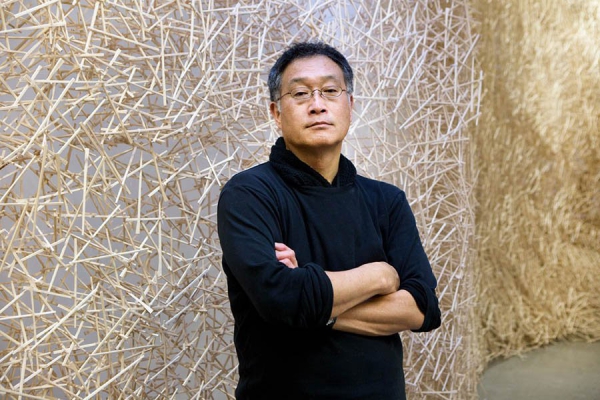
Tadashi Kawamata
Tadashi Kawamata (1953-) has been active on the international stage since participating in the Venice Biennale in 1982. Employing a method he calls “work in progress,” he has developed projects both in Japan and abroad in which the process of making itself becomes the artwork. In a 1993 issue of "Geijutsu Shincho," Yusuke Nakahara selected Kawamata’s Under Construction series as one of his “Top Ten Postwar Artworks.” In his essay “Building Blocks and Nature,” Nakahara further examined Kawamata’s work, noting that its “soft structures”—constructed from loosely assembled wooden fragments and planks, reminiscent of building blocks and seemingly easy to dismantle—stand in contrast to the “hard structures” of other sculptural works. He highlighted Kawamata’s practice as exemplifying the artwork as an event.
Reference: Vol. 11 “Monographs – Western Europe, Eastern Europe, Russia, North and South America, East Asia, and Japan.”
Reference: Vol. 11 “Monographs – Western Europe, Eastern Europe, Russia, North and South America, East Asia, and Japan.”
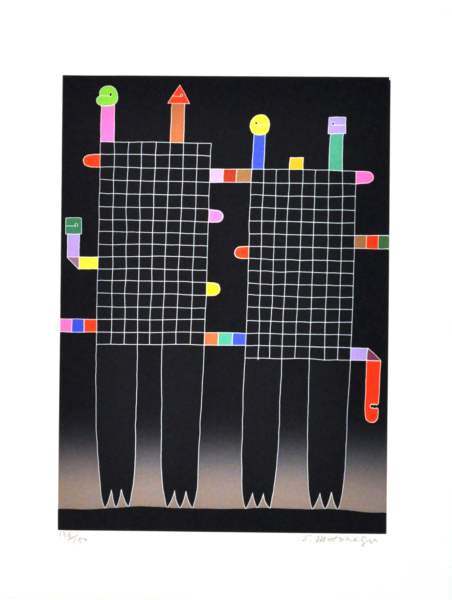
Sadamasa Motonaga
Sadamasa Motonaga (1922-2011), born in Mie Prefecture, entered the Osaka Nakanoshima Art Institute in 1940, and in 1955 joined the Gutai Art Association, where he remained a central member for 16 years. At the same time, he was also active as a picture book author. During his Gutai period, Motonaga drew on unknown aspects of nature as a source of creation, producing works that employed unconventional materials to express natural phenomena—such as suspending colored water in vinyl bags and staging performances using smoke. Yusuke Nakahara referred to Motonaga’s works—in which smoke contained in bags is released and spreads into the surrounding space according to natural principles—as “naturalist,” emphasizing how they present states of matter beyond the artist’s control.
Reference: Vol. 8 “What Is Contemporary Art? – ‘Dialogues’ on Twentieth-Century Art.”
Reference: Vol. 8 “What Is Contemporary Art? – ‘Dialogues’ on Twentieth-Century Art.”
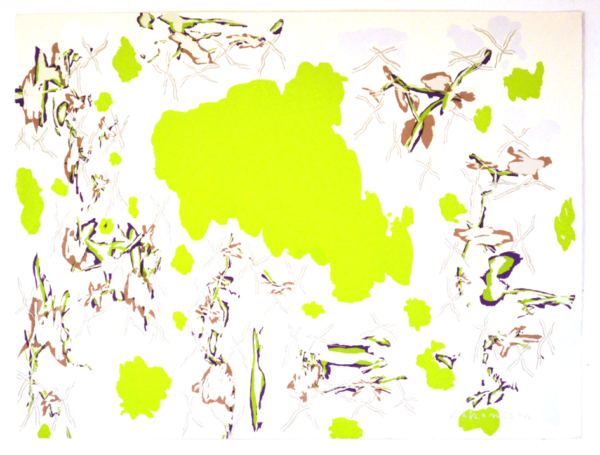
Natsuyuki Nakanishi
Natsuyuki Nakanishi received an honorable mention at the 1959 Shell Art Award for his work Rhythm, a painting in which T-shaped forms were created with an air compressor on a plaster-like surface made from marble powder. He later produced works such as Clothespins Assert Stirring Action, in which everyday objects were used as artistic materials. In his essay “On Natsuyuki Nakanishi,” published in 1962 in issue no. 147 of the magazine Sansai, Yusuke Nakahara sharply analyzed Nakanishi’s transition from painting toward assemblage using materials. He highly valued Nakanishi’s approach—detaching everyday objects (such as clothespins) from their original relationship to human use and foregrounding the inherent strangeness of the material itself as a “rebellion of matter”—as exemplifying an “aesthetics of nonsense.”
See Vol. 3: “The Course of the Avant-Garde – The Era of the Indépendant Exhibition and the Aesthetics of Nonsense.”
See Vol. 3: “The Course of the Avant-Garde – The Era of the Indépendant Exhibition and the Aesthetics of Nonsense.”
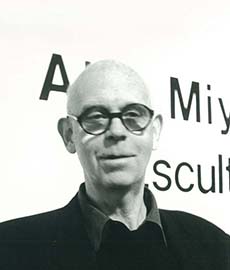
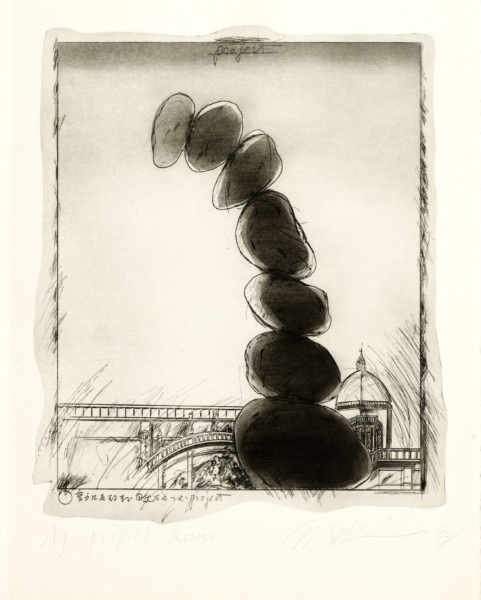
Class Oldenburg
Class Oldenburg was a leading sculptor of American Pop Art, known for his monumental sculptures and works based on everyday objects. By dramatically enlarging ordinary items or rendering typically hard objects in soft materials, he questioned our perception and the nature of urban space. In his essay “The Desire for Monumentality,” Yusuke Nakahara discussed Oldenburg’s Proposed Colossal Monuments from a broad perspective, tracing a line of thought from René Magritte through Jackson Pollock. Nakahara interpreted the phenomenon of the “monumentalization of everyday objects” not as a mere change of scale, but as an attempt to deconstruct and reconstruct the meaning of objects.
See Vol. 3: “The Course of the Avant-Garde – The Era of the Indépendant Exhibition and the Aesthetics of Nonsense.”
See Vol. 3: “The Course of the Avant-Garde – The Era of the Indépendant Exhibition and the Aesthetics of Nonsense.”
Yoshishige Saito
Yoshishige Saito (1904-2001), born in 1904, was an artist active from the prewar period. From 1933 to 1935, he studied at the Avant-Garde Western Painting Institute led by Harue Koga and Seiji Togo, where he developed his practice under the influence of Constructivism and Dadaism. After the war, through his connection with Shuzo Takiguchi, Saito held his first solo exhibition in Japan, Yoshishige Saito Exhibition, at Tokyo Gallery, bringing renewed attention to his work. On the occasion of Saito’s 1973 solo exhibition, which presented both his prewar and postwar works, Yusuke Nakahara wrote that "it made possible an opportunity to comprehensively view within a single perspective both Yoshishige Saito’s work as one of the pioneers of abstract painting and the works he produced thereafter, when he was newly spotlighted as a promising postwar artist.” Through this, Nakahara analyzed and articulated the significance of Saito’s long and sustained artistic practice.
Reference: Vol. 11 “Monographs – Western Europe, Eastern Europe, Russia, North and South America, East Asia, and Japan.”
Reference: Vol. 11 “Monographs – Western Europe, Eastern Europe, Russia, North and South America, East Asia, and Japan.”
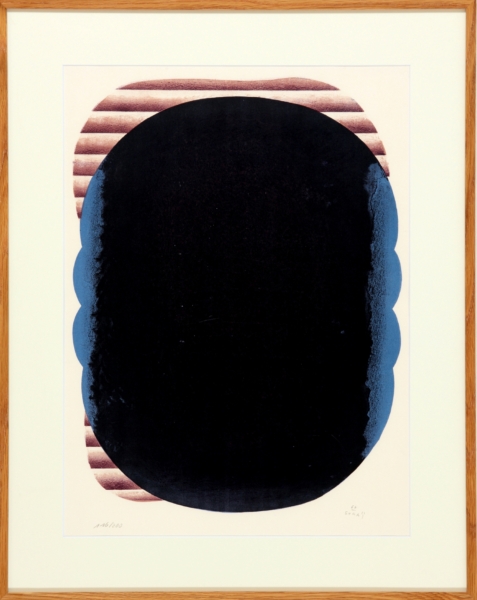
Nobuo Sekine
Regarding Nobuo Sekine, a leading artist of the Mono-ha, Yusuke Nakahara wrote a critical text in 1969, the year following the presentation of Sekine’s early landmark work Phase—Mother Earth (1968) at Suma Rikyu Park in Kobe. At a time when debates over the very nature of art were intensifying in response to emerging modes of expression such as “action painting,” Nakahara used this “new” work presented by a young artist as a point of departure to reflect on the relationship between “art” and “criticism.” Nakahara went on to highly evaluate the subsequent developments of Mono-ha, and theoretically positioned Sekine’s work and its innovations within the context of the Japanese contemporary art scene of the 1960s and 1970s.
Reference: Vol. 1 “Criticism for Creation – The Horizon of Postwar Art Criticism.”
Reference: Vol. 1 “Criticism for Creation – The Horizon of Postwar Art Criticism.”
Kumi Sugai
Kumi Sugai (1919-1996) worked as a graphic designer while studying Japanese painting under Teii Nakamura. Deeply interested in Western art, he moved to France in 1952. In his early period, he produced works that abstracted letters and signs; from the 1960s onward, however, his style shifted toward compositions inspired by traffic signs and the sense of speed of automobiles, characterized by vivid colors and sharply defined contours. Yusuke Nakahara discussed Sugai’s work alongside that of Piet Mondrian, noting how Sugai established basic formal elements and generated works through their combinations, and evaluated his practice as a form of “painting by mechanical means.” In later years, Nakahara—then director of the Hyogo Prefectural Museum of Art—also gave a lecture titled “The Director on Kumi Sugai” (2007).
Reference: Vol. 8 “What Is Contemporary Art? – ‘Dialogues’ on Twentieth-Century Art.”
Reference: Vol. 8 “What Is Contemporary Art? – ‘Dialogues’ on Twentieth-Century Art.”
Jiro Takamatsu
Jiro Takamatsu (1936-1998) began presenting his work at the Yomiuri Indépendant Exhibition in 1961, and in 1962 co-founded the Hi-Red Center with Natsuyuki Nakanishi and Genpei Akasegawa, engaging in happenings. From the mid-1960s onward, he received numerous awards in Japan and was introduced internationally as a leading Japanese artist at exhibitions such as the Venice Biennale and documenta, gaining wide recognition both domestically and abroad. In 1966, Yusuke Nakahara contributed the essay “Painting of Exploration” to the catalogue of Takamatsu’s solo exhibition Jiro Takamatsu: Identification, held at Tokyo Gallery. In this text, he offered a poetic analysis of the essence of Takamatsu’s “Shadow” series, which the artist was developing at the time.
Reference: Vol. 3 “The Course of the Avant-Garde – The Era of the Indépendant Exhibition and the Aesthetics of Nonsense.”
Reference: Vol. 3 “The Course of the Avant-Garde – The Era of the Indépendant Exhibition and the Aesthetics of Nonsense.”
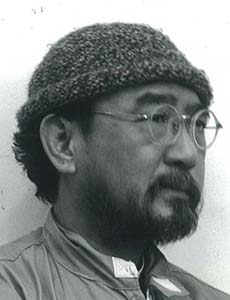
Shintaro Tanaka
Shintaro Tanaka (1940-2019), regarded as one of the leading artists of the avant-garde through his activities in the 1960s, including the Yomiuri Indépendant Exhibition and Neo-Dada Organizers, consistently pursued a distinctive mode of expression through tension-filled, minimal paintings and sculptures, exerting a strong influence on designers and the field of architecture. Regarding "Minor Art A, B, C " (1968)—composed of three square canvases each framed by a different type of neon—Yusuke Nakahara wrote in his serialized column “Art Review – A Retrospective of Art in 1968” in "Sansai" that it was “one of the most impressive works I saw that year,” identifying it as a rare example that sought to shift the artwork from a “thing” to a “state.” Tanaka was also the only member of the Neo-Dada group to be included in the international exhibition Expo '70: Man and Matter, organized by Nakahara in 1970.
Reference: Vol. 4 “From the Myth of Seeing – The Autonomy of the Idea and the Transformation of Art.”
Reference: Vol. 4 “From the Myth of Seeing – The Autonomy of the Idea and the Transformation of Art.”
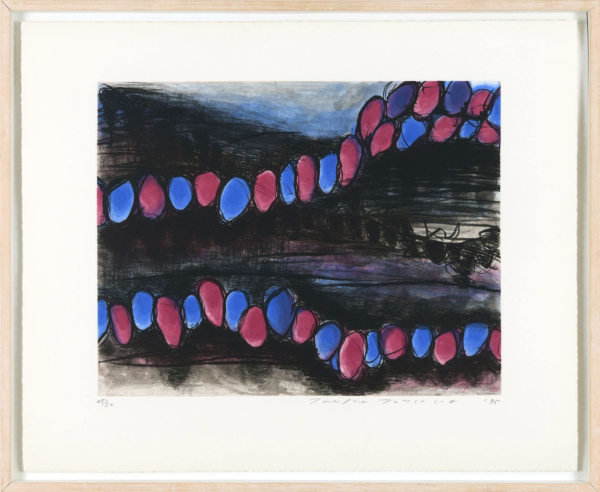
Toeko Tatsuno
Toeko Tatsuno (1950-2014) developed her practice in the 1970s in relation to movements such as Post-Minimalism, experimenting through printmaking and drawing with the visualization of subtle differences generated by variations in line weight and slight bleeding. In 1973, she participated in the Tokyo Biennale 1973, for which Yusuke Nakahara served as commissioner. From the 1980s onward, focusing primarily on painting, she developed a distinctive mode of expression combining serial patterns of diverse motifs—such as arabesques, diamonds, squares, and spheres, both organic and geometric—with rich color effects that make full use of the materiality of oil paint. In 1995, she held a solo exhibition at the The National Museum of Modern Art, Tokyo, becoming the youngest artist (at that time) to do so.
Shigeo Toya
Shigeo Toya (1947-) has, since holding his first solo exhibition in 1974, primarily created sculptural works by carving wood with a chainsaw. In Play of Manners: Spring 1990 – The State of Contemporary Art, the inaugural exhibition of Art Tower Mito, opened in 1990, works by 23 artists—anticipating developments in contemporary art of the 1990s—were presented, including those by Toya. Yusuke Nakahara contributed an essay titled “The Position of Contemporary Art” to the exhibition catalogue. Through this exhibition, which presented the contemporary art scene of the time in a seemingly “all-inclusive” manner, he examined the significance of measuring the “position” of art from the standpoint of everyday lived experience.
Reference: Vol. 10 “Art in Society – Expanding Exhibition Spaces.”
Reference: Vol. 10 “Art in Society – Expanding Exhibition Spaces.”
Keiji Usami
Keiji Usami developed a practice that sought to articulate the problems of art through painting itself, while attempting to propose responses to them within his works. Yusuke Nakahara contributed a review to Usami’s first solo exhibition, held in 1963 at Minami Gallery, a pioneering venue for contemporary art at the time. He wrote: “A desire for negation drives the work toward a singular and seemingly superficial pictorial surface. In this, one can discern a characteristic of painting in the generation after Abstract Expressionism. Beginning from an end point, this painter’s work suggests a crystallization of continual negation.” Through this assessment, Nakahara identified in the young artist’s paintings the emergence of a new horizon for art.
Reference: Vol. 3 “The Course of the Avant-Garde – The Era of the Indépendant Exhibition and the Aesthetics of Nonsense.”
Reference: Vol. 3 “The Course of the Avant-Garde – The Era of the Indépendant Exhibition and the Aesthetics of Nonsense.”