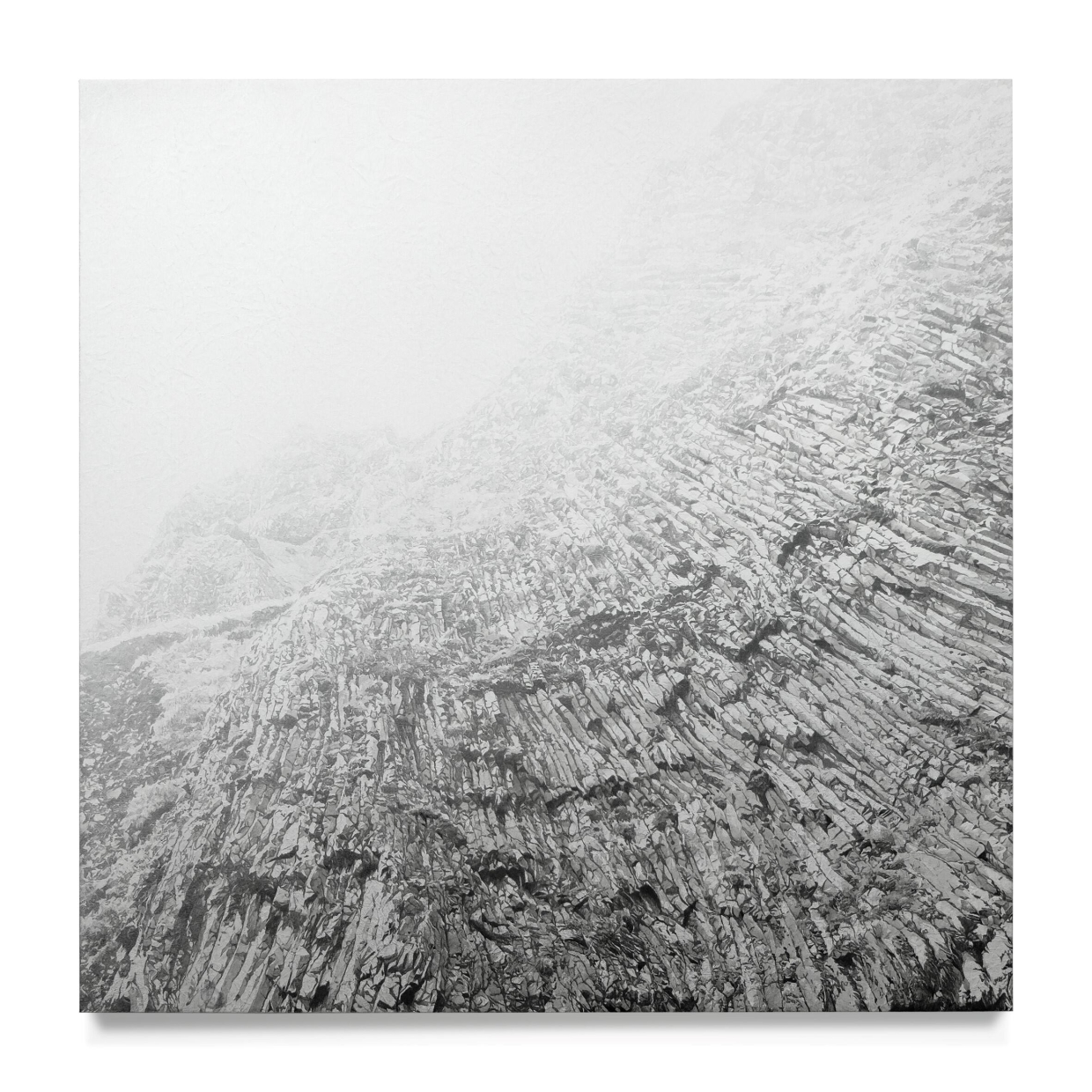
Akira Kugimachi :From the Land of Men
Ended
Friday2 February - Sunday25 February 2024
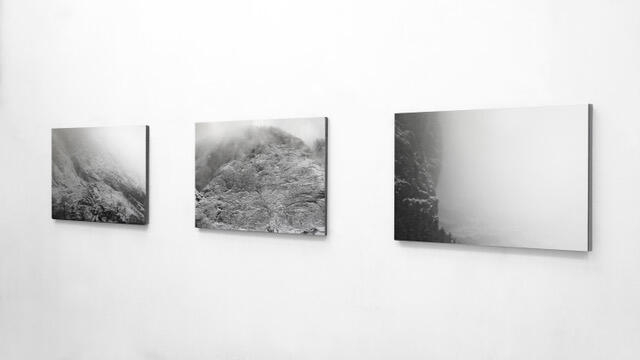
Art Front Gallery is pleased to present the first solo exhibition by Paris-based Akira Kugimachi (b. 1968, Yokohama). The exhibition will be linked to the Yebisu Film Festival and will focus on an installation composed of video and paintings.
After spending his childhood in Belgium, MFA at Tama Art University and studying media art and philosophy, which forms the basis of his work, at the University of Paris VIII, he has concentrated on his creative activities. Using Japanese paper and natural mineral pigments, Kugimachi depicts landscapes based on the concept of 'light, time and distance', and showcasing his current location at this exhibit in a selection of two-dimensional works and videos.
After spending his childhood in Belgium, MFA at Tama Art University and studying media art and philosophy, which forms the basis of his work, at the University of Paris VIII, he has concentrated on his creative activities. Using Japanese paper and natural mineral pigments, Kugimachi depicts landscapes based on the concept of 'light, time and distance', and showcasing his current location at this exhibit in a selection of two-dimensional works and videos.
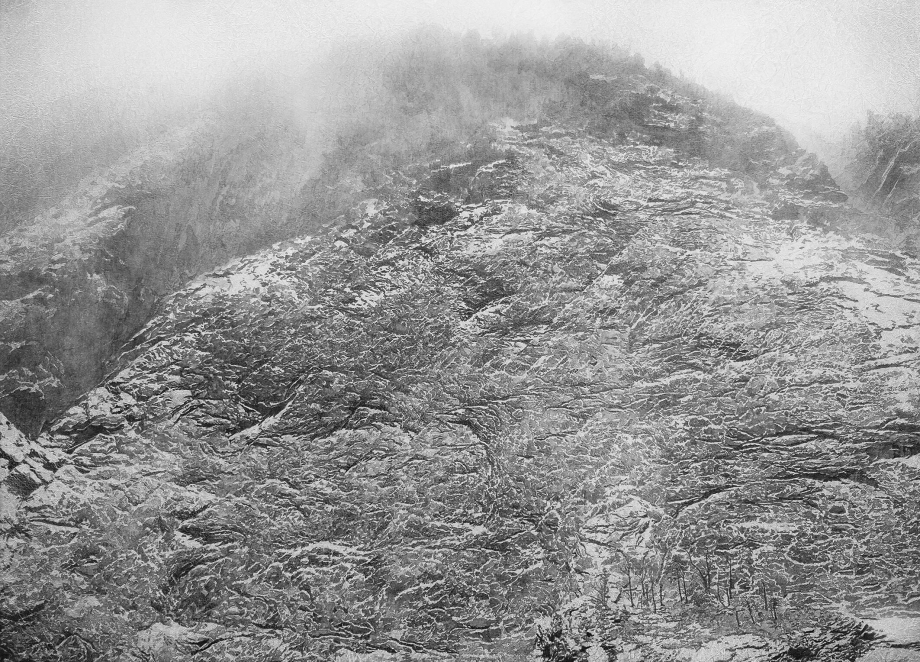
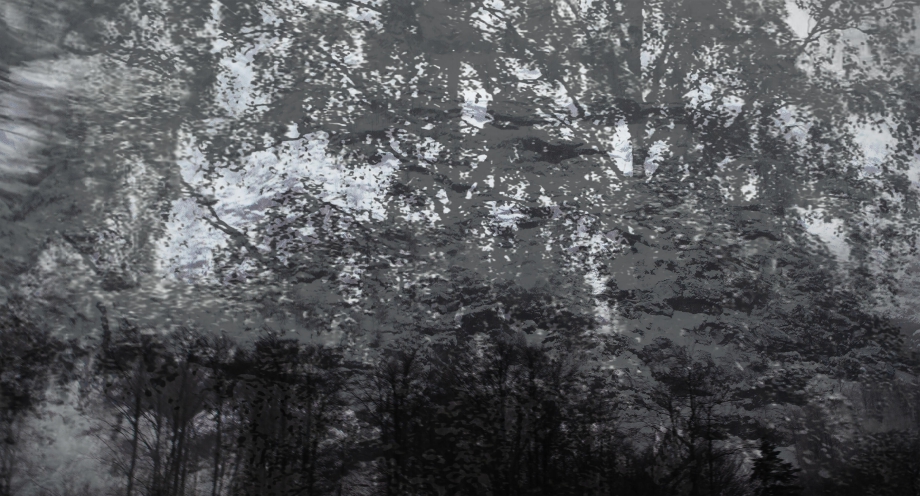
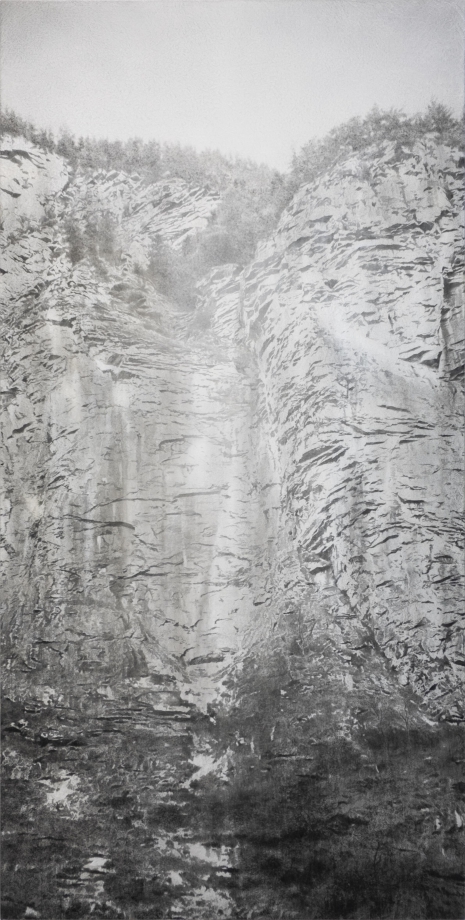
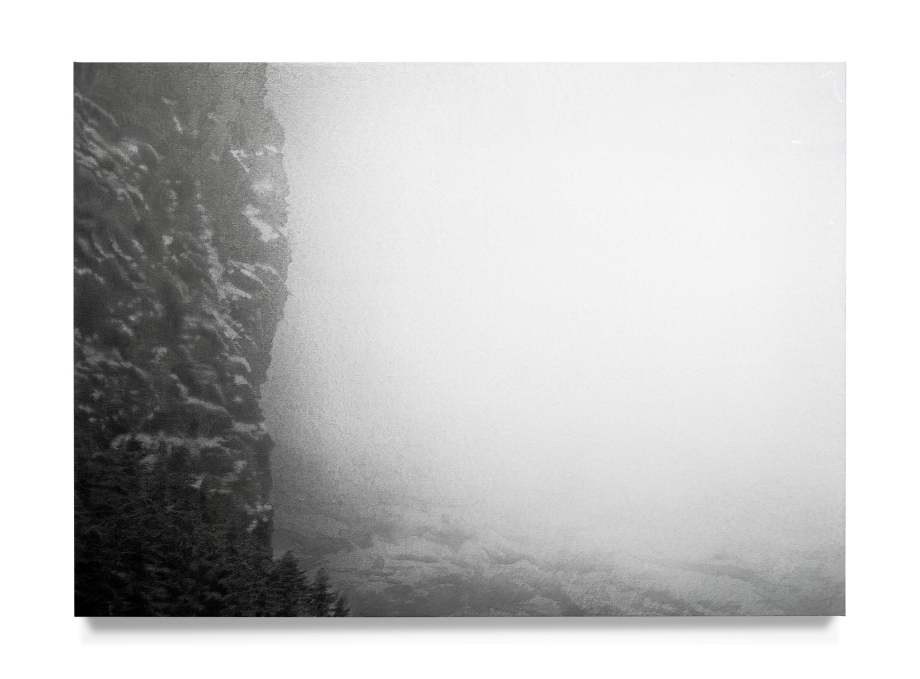
Kugimachi has consistently confronted landscapes and made them into works of art. About 10 years ago in winter, the artist encountered a landscape around the Swiss-Italian border. It was not just a landscape of snowy mountains, but a world of chaos that could be described as pre-human or post-human, and shook the artist's soul as a primordial chaotic landscape before the emergence of light and darkness in the world, or the dualism of heaven and earth. For Kugimachi, landscapes are a 'place' for reaffirming the position of human beings and a 'device for questioning the relationship between the world and human beings'. Indeed, in his recent Air series, rather than fixing fleeting light and shadow on the canvas as he had done in the past, we can sense the artist's ambition to reveal the memories of this planet, which are contained in rock surfaces, glaciers and the atmosphere permeating them, that have passed through time beyond the human scale of thousands or tens of thousands of years. His paintings are made with what he calls 'earth materials': natural, unrefined, brute rock paints and sumi ink from shells and pine trees, as well as deliberately adulterated glue and washi paper. The conceptual approach to painting, in which the artist becomes the medium, the means of painting, the process of painting and the materials are one and the same, while making full use of modern equipment such as photography and video, is in line with what Nobunaga Motoori called 'the unity of expression and technique', and has its origins in the ancient theories of the mysterious in the works of Teika Fujiwara and Zeami. The source of this can be found in the ancient theories of Fujiwara no Teika and Zeami.
| Hours | Wed. - Fri. 12:00 - 19:00 / Sat. Sun. and Feb.23 11:00 - 17:00 |
| closed on | Mondays and Tuesdays |
| Reception and artist talk | 2024年2月2日 (金)18:30 - 20:30 / スペシャルトークイベント 19:00-20:00 山下裕二 (美術史家・明治学院大学教授)x 釘町彰 ※定員に達した為、受付を終了させて頂きました。 |
| In Resonance at | Yebisu International Festival for Art 2024 Feb. 2 (Fri) 2024 - Feb. 18 (Sun) |
| artist at the gallery | 2/2 (Fri), 3 (Sat)14-17h, 4 (Sun)15-17h, 11 (Sun)14-17h |
Exhibition Highlight
During the production process, he says he spends 90% of his time on the groundwork. He first applies ink to the rubbed Japanese paper and then applies several thin layers of light with gofun (gofun) on top of it. As a result, the white of the ground is not just white, but also opaque, with a mysterious depth as a background and a feeling of air between eternity and the moment. The more motifs are painted on top using rock paints, the more reality is lost.
Taking this as a counterpoint, he began to think of the paint as a silhouette and wanted to create paintings in which there is no object or absence of an object, setting out to try to connect the flowing images with the so-called 'aesthetics of withdrawal' of the paintings made with rock paints, and this led to this installation of images and flat surfaces.
Taking this as a counterpoint, he began to think of the paint as a silhouette and wanted to create paintings in which there is no object or absence of an object, setting out to try to connect the flowing images with the so-called 'aesthetics of withdrawal' of the paintings made with rock paints, and this led to this installation of images and flat surfaces.
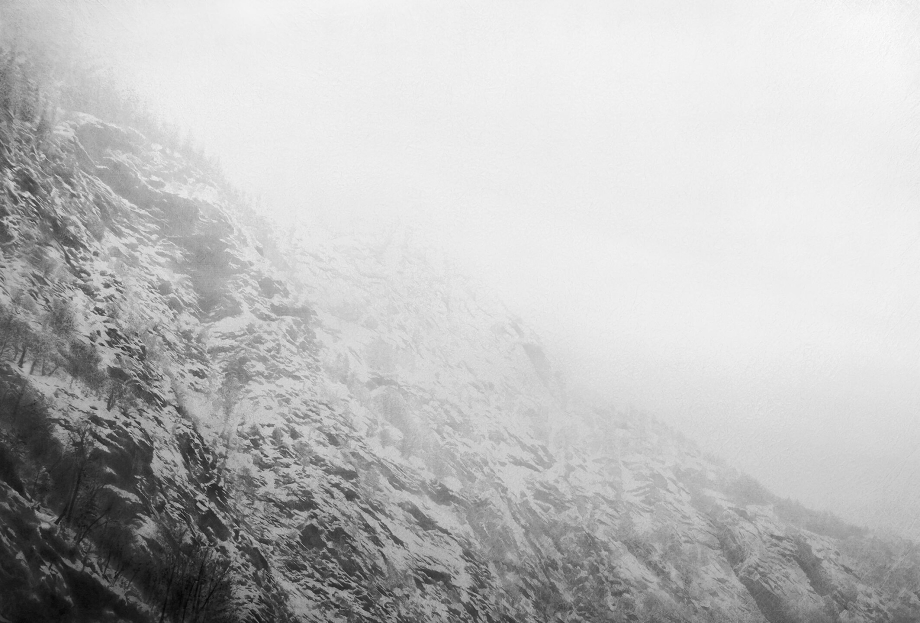
Kugimachi studied media art at the University of Paris VIII and says that as a student he studied video art and interactive art by Bill Viola, and was also influenced by French philosophers Levi-Strauss and Gilles Deleuze, as well as the Zen philosophy of D.T. Suzuki. Whether it is video or painting, his work is consistent in that 'the work is always a process, and both the creator and the viewer are always in a situation of process'. In this exhibition, video images projected on multiple screens and large, recent paintings will intersect along various time lines to transmit something behind the images, or the absence of that 'something'.
Movies
《From the Land of Men》©Akira Kugimachi, Collaboration With HANNA
Being Dative case: the World of Akira Kugimachi
Takeshi NakajimaPolitical Scientist, Professor at Institute for Liberal Arts, Tokyo Institute of Technology
What most hinders the creation of beauty is an over-determined attempt to make it. The more you strive for beauty the more it will elude you. To capture it, you must cast aside all intentionality.
I have never had the chance to meet Akira Kugimachi, nor have I directly seen many of his works, but the first time I saw one, I knew at once that his consciousness was directed towards movement beyond intention and determination.
Kugimachi seeks to draw what all action leaves unattainable. He aims for existences that cannot be seized by a self – by an ‘I’. To find what he seeks, he goes beyond ‘I’, surmounting intention, and taking his chances.
I studied Hindi, which has a dative case. For example, to say, ‘I am happy’, you say ‘happiness comes to me and stays there’. To say ‘I love you’, you say ‘love of you comes to me and stays there’. For ‘I understand Hindi’, you say ‘Hindi comes to me and stays there.’ Such is the grammatical pattern.
I once gave this matter some thought. If happiness, love, or language come to me and stay there, where do they come from?
Indians regard origins as lying with the gods. ‘I’ is no more than a vessel accommodating things from gods. It is not the case that ‘I’ do things with my own abilities. Rather, I accept what comes to me, achieving by the promptings of another power. The nominative case is an illusion. It is not possible for ‘I’ to control ‘I’.
Kugimachi is what might be called a ‘dative case’ painter. It might be that painting is something that comes to him, not something his nominative-case selfhood controls. Forms crystalize in his work beyond the dimension in which ‘I’ is able to paint.
Perhaps for this reason, Kugimachi likes to capture light. Light renders matter visible. But light does not need light, and it is impossible for us to see light itself. The presence of light is detected only by the existence of shadows.
Humanity is limited, and we cannot depict the infinities of light. Light is rendered by not being drawn. A painting by Kugimachi closes in on this uncapturability, inviting viewers into the source of light.
In front of Kugimachi’s work, you don’t so much use your eyes, as use your gaze. You view, you do not look. Such is Kugimachi’s work.
I have never had the chance to meet Akira Kugimachi, nor have I directly seen many of his works, but the first time I saw one, I knew at once that his consciousness was directed towards movement beyond intention and determination.
Kugimachi seeks to draw what all action leaves unattainable. He aims for existences that cannot be seized by a self – by an ‘I’. To find what he seeks, he goes beyond ‘I’, surmounting intention, and taking his chances.
I studied Hindi, which has a dative case. For example, to say, ‘I am happy’, you say ‘happiness comes to me and stays there’. To say ‘I love you’, you say ‘love of you comes to me and stays there’. For ‘I understand Hindi’, you say ‘Hindi comes to me and stays there.’ Such is the grammatical pattern.
I once gave this matter some thought. If happiness, love, or language come to me and stay there, where do they come from?
Indians regard origins as lying with the gods. ‘I’ is no more than a vessel accommodating things from gods. It is not the case that ‘I’ do things with my own abilities. Rather, I accept what comes to me, achieving by the promptings of another power. The nominative case is an illusion. It is not possible for ‘I’ to control ‘I’.
Kugimachi is what might be called a ‘dative case’ painter. It might be that painting is something that comes to him, not something his nominative-case selfhood controls. Forms crystalize in his work beyond the dimension in which ‘I’ is able to paint.
Perhaps for this reason, Kugimachi likes to capture light. Light renders matter visible. But light does not need light, and it is impossible for us to see light itself. The presence of light is detected only by the existence of shadows.
Humanity is limited, and we cannot depict the infinities of light. Light is rendered by not being drawn. A painting by Kugimachi closes in on this uncapturability, inviting viewers into the source of light.
In front of Kugimachi’s work, you don’t so much use your eyes, as use your gaze. You view, you do not look. Such is Kugimachi’s work.
Featured Artists
Akira Kugimachi
After spending his childhood in Belgium, MFA at Tama Art University and studying media art and philosophy, which forms the basis of his work, at the University of Paris VIII, he has concentrated on his creative activities. Using Japanese paper and natural mineral pigments, Kugimachi depicts landscapes based on the concept of 'light, time and distance'. For Kugimachi, landscapes are a 'place' for reaffirming the position of human beings and a 'device for questioning the relationship between the world and human beings'. His paintings are made with what he calls 'earth materials': natural, unrefined, brute mineral pigments and sumi ink from shells and pine trees, as well as deliberately adulterated glue and washi paper. He uses a conceptual painting technique in which he becomes the medium, and means, process, and materials are one and the same. He began to think of the paint as a silhouette and wanted to create paintings of absense in which there is no object. Then, he realised this emptiness has affinity with video. For this reason, in recent years, he has also been developing installation works that combine videos with paintings made with mineral pigments, which are the so-called 'aesthetics of withdrawal.'
■Biography
1968 Born in Yokohama, Japan
1995 MFA in Fine Arts, Japanese Painting Departement, Tama Art University ,Tokyo,Japan
1995-96 Ecole National Supérieure des Beaux-Arts de Marseille, France
1999 MFA in Media Art and Technology, University of Paris VIII, Saint-Denis, France
■Solo Exhibitions
2020 'Elpis' Gallery Pierre-Yves Caër / Paris (France)
2018 'Erewhon' Gallery Art Composition / Tokyo
2017 'Re-generation' Nihonbashi Mitsukoshi / Tokyo
■Group Exhibitions
2023 'Dystopia Transition from Memory' / Art Front Gallery (Yebisu Film Festival Cooperation Program) / Tokyo
2023 'Dialogue of Paintings and Ceramics' / Cernuschi Museum / Paris (France)
2022 'Matsumoto Architecture + Art Festival' / Nagano
2022 'The Brilliance of Contemporary Japanese Paintings' / Niimi Art Museum / Okayama (Japan)
2019 'Art Paris19' / Grand Palais / Paris (France)
2018 'Renaissance Contemporaine' / Pierre-Yves Caër Gallery / Paris (France)
2018 'Cabinet Da-end 08' / Galerie Da-end /Paris (France)
2017 'Collect' / SAATCHI Gallery / London (England)
2017 'L'Aurore de Paysage' / Villa88 /Bordeaux (France)
2016 'Paysages Subjectifs' / Lanchervich Muséum / La Louvière (Belgium)
2016 'Encounters' / Gallery DUTKO / London (England)
2015 'Ombre et Lumière'/ Gallery DUTKO Bonaparte / Paris (France)
2015 'Regards croisé sur le Polochon' / Institut National des Métiers d’Art / Paris (France)
2015 'Mode Nippon V & Créateur 80'' / Artcurial / Paris (France)
2013 'Contemporary Sumi-ink Artist Exhibition' / The National Art Center, Tokyo
2012 'A Force de regarder au lieu de voir' / Galerie des Grands Bains Douches de la Plaine / Marseille (France)
2011 'Tragique du Paysage'/ Galerie Eric Mircher /Paris (France)
■Collection & Selected projects
Cernuschi Museum (Paris) / Niimi Art Museum (Okayama , Japan ) / Azabudai Hills AMAN Residence /The Peninsula Tokyo (Tokyo) / Rigenji Temple (Tokyo) / Mitsubishi Corporation (Paris) / Former Residence of Kenzo Takada (Paris) / Nishi Sake Brewery (Kagoshima) / and many others
■Biography
1968 Born in Yokohama, Japan
1995 MFA in Fine Arts, Japanese Painting Departement, Tama Art University ,Tokyo,Japan
1995-96 Ecole National Supérieure des Beaux-Arts de Marseille, France
1999 MFA in Media Art and Technology, University of Paris VIII, Saint-Denis, France
■Solo Exhibitions
2020 'Elpis' Gallery Pierre-Yves Caër / Paris (France)
2018 'Erewhon' Gallery Art Composition / Tokyo
2017 'Re-generation' Nihonbashi Mitsukoshi / Tokyo
■Group Exhibitions
2023 'Dystopia Transition from Memory' / Art Front Gallery (Yebisu Film Festival Cooperation Program) / Tokyo
2023 'Dialogue of Paintings and Ceramics' / Cernuschi Museum / Paris (France)
2022 'Matsumoto Architecture + Art Festival' / Nagano
2022 'The Brilliance of Contemporary Japanese Paintings' / Niimi Art Museum / Okayama (Japan)
2019 'Art Paris19' / Grand Palais / Paris (France)
2018 'Renaissance Contemporaine' / Pierre-Yves Caër Gallery / Paris (France)
2018 'Cabinet Da-end 08' / Galerie Da-end /Paris (France)
2017 'Collect' / SAATCHI Gallery / London (England)
2017 'L'Aurore de Paysage' / Villa88 /Bordeaux (France)
2016 'Paysages Subjectifs' / Lanchervich Muséum / La Louvière (Belgium)
2016 'Encounters' / Gallery DUTKO / London (England)
2015 'Ombre et Lumière'/ Gallery DUTKO Bonaparte / Paris (France)
2015 'Regards croisé sur le Polochon' / Institut National des Métiers d’Art / Paris (France)
2015 'Mode Nippon V & Créateur 80'' / Artcurial / Paris (France)
2013 'Contemporary Sumi-ink Artist Exhibition' / The National Art Center, Tokyo
2012 'A Force de regarder au lieu de voir' / Galerie des Grands Bains Douches de la Plaine / Marseille (France)
2011 'Tragique du Paysage'/ Galerie Eric Mircher /Paris (France)
■Collection & Selected projects
Cernuschi Museum (Paris) / Niimi Art Museum (Okayama , Japan ) / Azabudai Hills AMAN Residence /The Peninsula Tokyo (Tokyo) / Rigenji Temple (Tokyo) / Mitsubishi Corporation (Paris) / Former Residence of Kenzo Takada (Paris) / Nishi Sake Brewery (Kagoshima) / and many others