Art Front Selection : Summer 2024
Ended
Saturday8 June - Sunday7 July 2024
Art Front Gallery is holding a summer selection exhibition.
Artists:
Tadashi Kawamata, Mounir Fatmi, Oscar Oiwa, Eko Nugroho, Shinji Ohmaki
Artists:
Tadashi Kawamata, Mounir Fatmi, Oscar Oiwa, Eko Nugroho, Shinji Ohmaki
| Hours | Wed. ~ Fri. 12:00 - 19:00 / Sat., Sun.:11:00 - 17:00 |
| Closed | Monday and Tuesday |
Exhibition Highlight
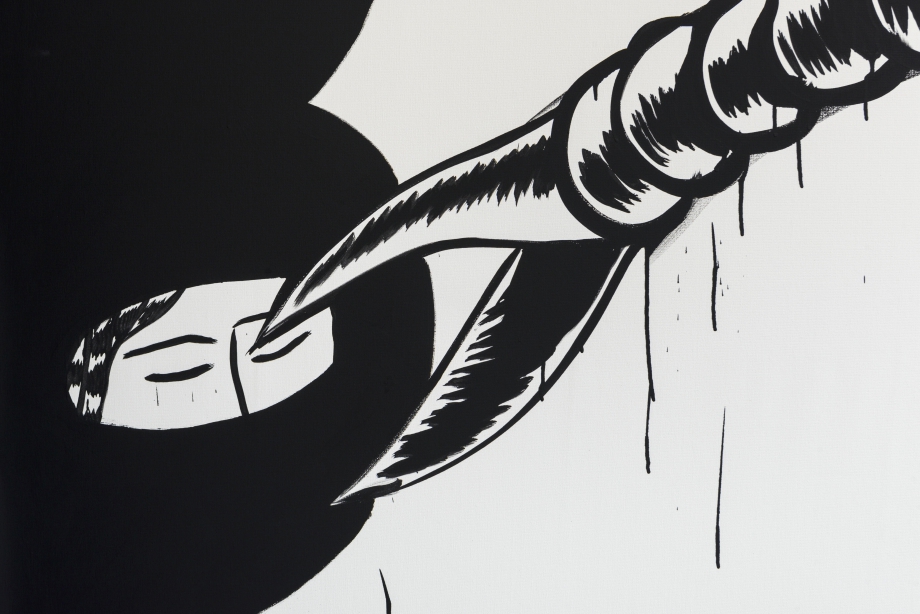
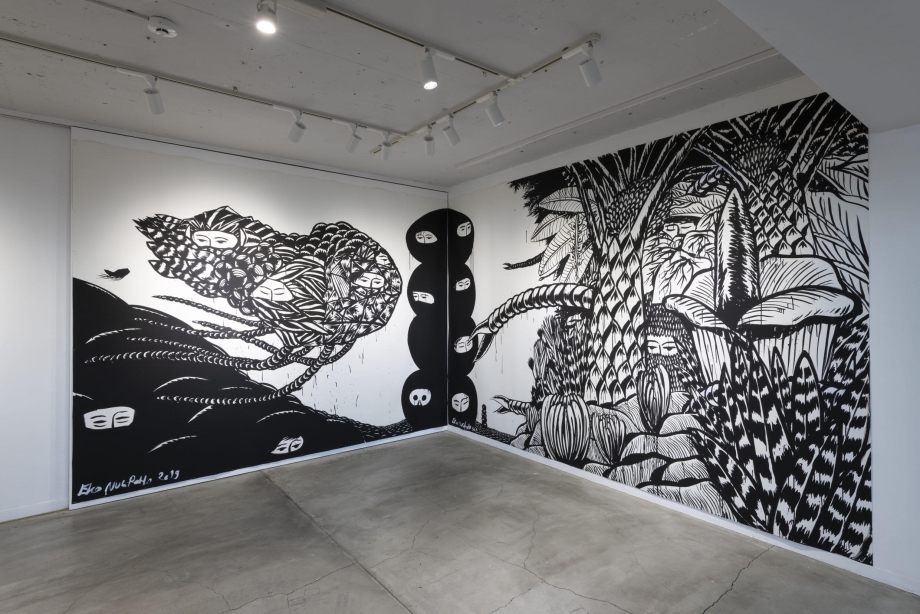
Born in 1977 in Yogyakarta, Indonesia, Eko Nugroho began his artistic career in the late 1990s when he was still a student at the Indonesian Art Institute. He now works across the globe as one of the most prominent Indonesian contemporary artists. Nugroho is a member of the “reformasi generation”, experiencing the democratising social reforms in the wake of the collapse of the Suharto regime triggered by the Asian Financial Crisis of 1997. The privilege of freedom of expression, which suddenly became a reality, has allowed him to create a wide range of artworks while projecting his own socio-political views.
Two elements, Indonesian tradition and references to contemporary pop culture can be seen as contribution to Nugroho’s works, which are created in Yogyakarta, the artistic centre of art on Java island. While introducing traditional batik and embroideries, his artworks reveals strong influences from contemporary art forms such as street art, graffiti and comics. He creates artworks in various media, from drawings and paintings to murals, sculpture, animation and tapestry.
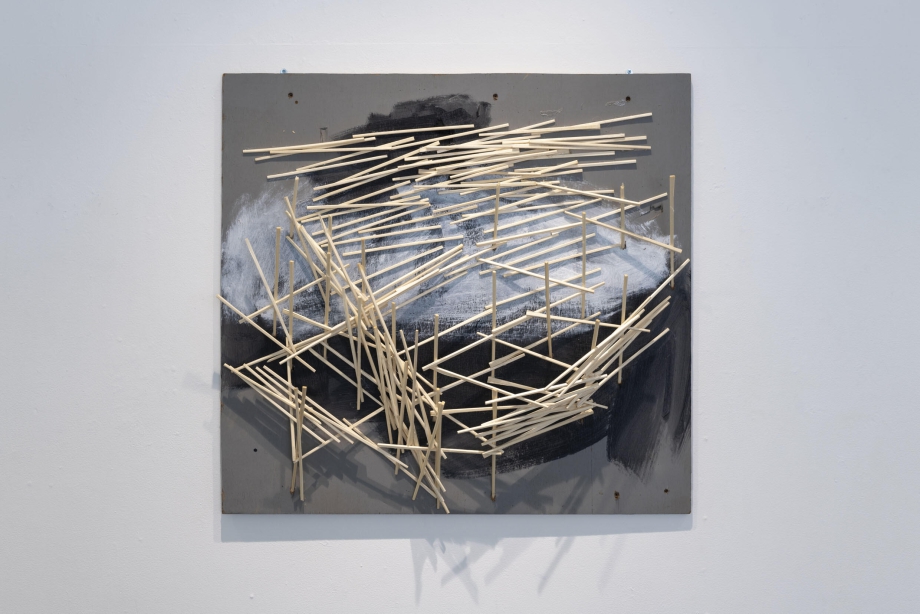
The work shown here is one of the works Kawamata created during his public residency in Echigo-Tsumari last year.
Kawamata's studio, built within the Tsumari Archive Centre as one of Kawamata's bases in Japan for the 2022 Echigo-Tsumari Art Triennale, is home to one of the largest maquettes in Japan. Kawamata's series, commonly referred to as Site Plans, are plans designed for imaginary buildings and places, rather than plans made for actual spaces. Just as a painter makes drawings to try out new things, Kawamata makes plans for these imaginary sites as a practice on a regular basis. Unlike the plans for the real site, these works seem to be a manifestation of the artist's feelings at the time, the movements of the world and the changing circumstances around him. In particular, this series, called Tsumari, uses green and brown paints, and some of them look like the landscape of the region.
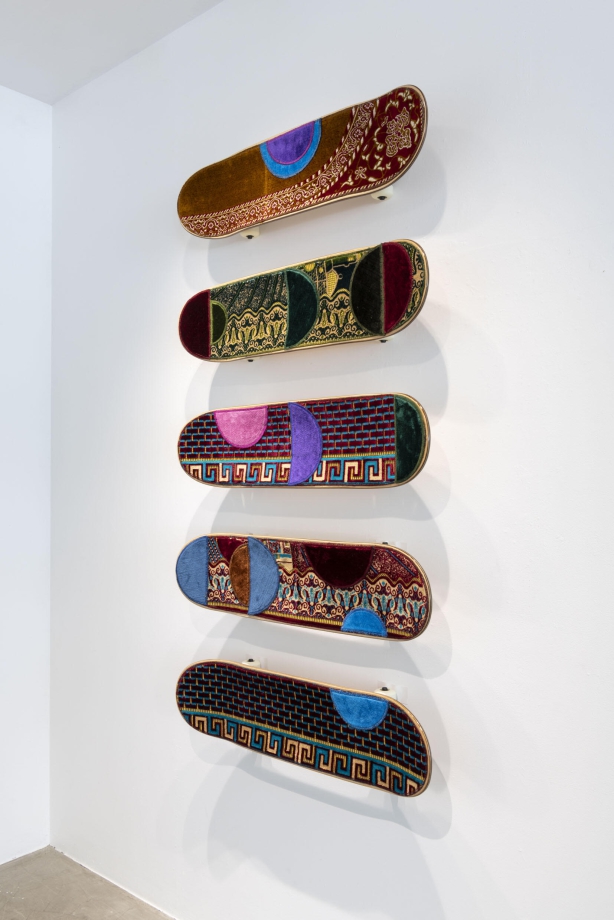
Maximum Sensation is composed of skateboards with colorful prayer rug and is in the collection of American museum and of European corporation. According to Fatmi, he met with a girl in Islamic dress in Afghanistan who drove her skateboard which was allowed for girls unlike bikes and bicycles. The artist was impressed with her courage for progressive change and created this piece as “homage to Afghan girl”. The title has double meaning of maximum sensation which people acquire through praying and other ritual action, or the bodily sensation we get by skateboard.
This work was exhibited in show window at the occasion of Setouchi Triennale 2016.
If Afghanistan is peripheral vis-à-vis Europe and its culture, the same can be said foro Japan. The artist emphasize the vision from periphery, since another vision has always elaborated and enlarged our thinking. Fatmi tries to, through his art, minimize the distance between countries or culture, or between the religion and ordinary lives of ourselves.
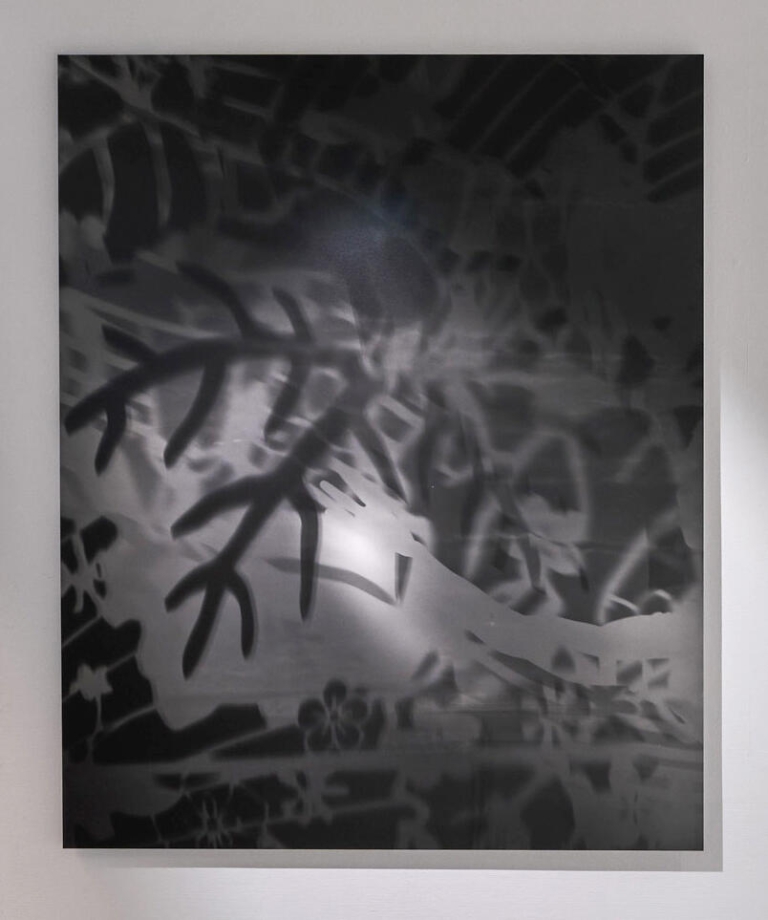
This work is a photogram of Shinji Ohmaki's solo exhibition 'Interface of Being' held at The National Art Center, Tokyo in late 2023. Gravity and Grace,' a large 7-meter-high crucible-shaped installation, played an iconic role as the first thing that caught the eye at the solo exhibition. The light and shadows created by the work, as well as the 'presence' of a human arm stretched between the work and the photographic paper, are burned onto the photographic paper as a photogram.
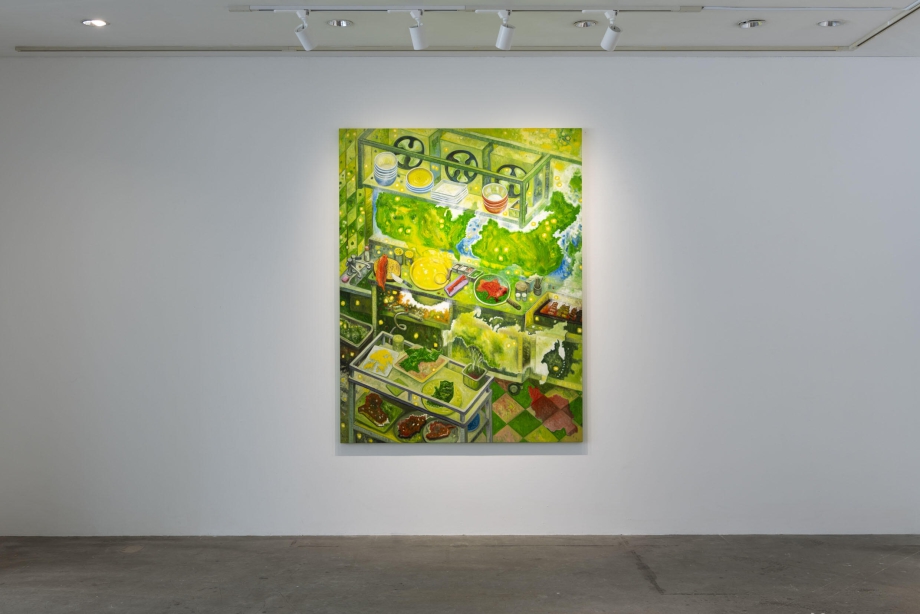
Works of Oiwa, as though veiled over the surface, attract the viewers' perspective into the depth of the plane. His interest in social matters, caught at first in newspapers and articles on internet, will be visualized through elaborative research and drawing process. The finished image, sometimes grandiose and apocalyptic, depicts the life and society with his characteristic sense of humor.
---
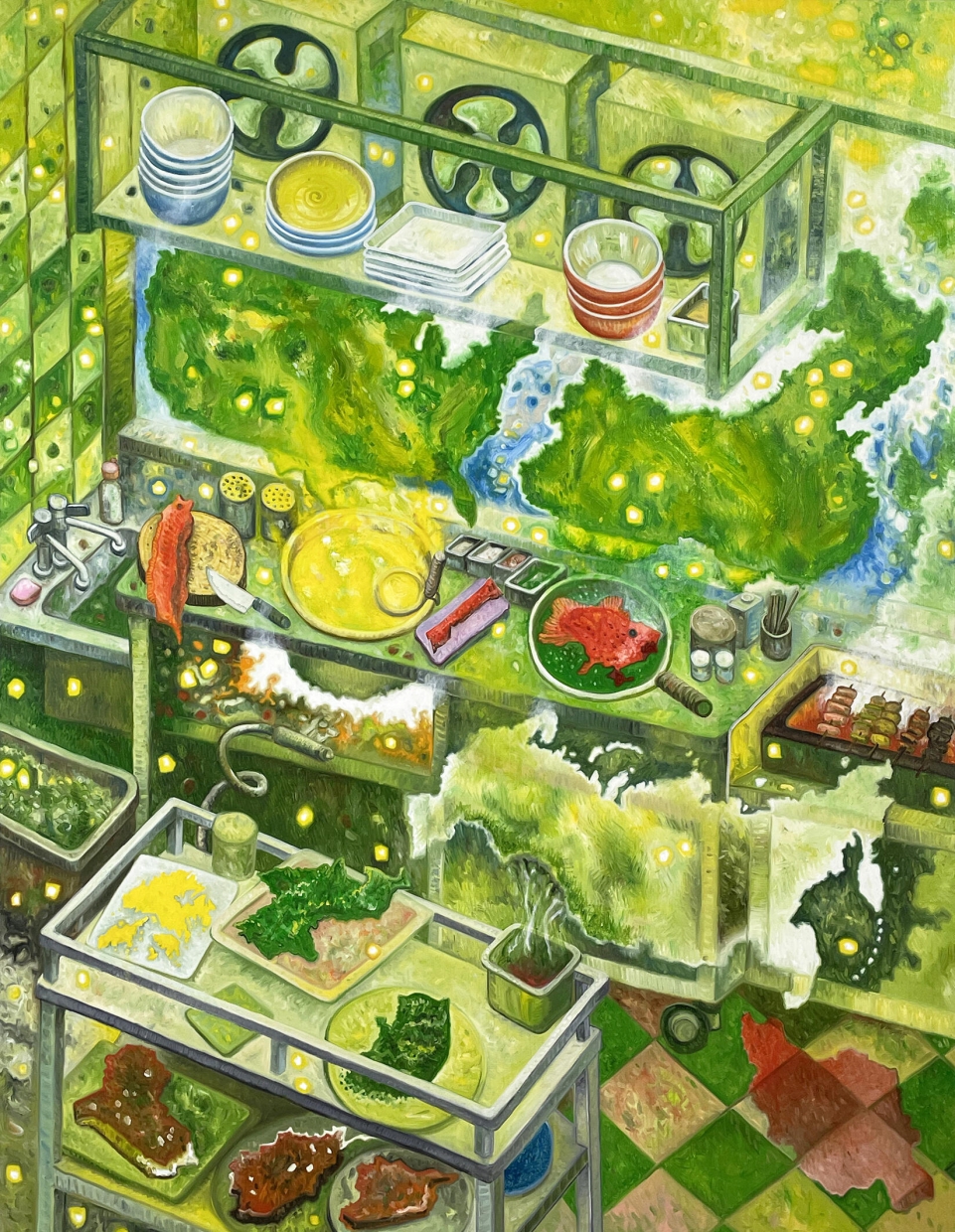
Hell's Kitchen series “Hell's Kitchen” is the name of the neighborhood in New York City where I currently live. It is close to Times Square and has a high concentration of restaurants, but it used to be a very dangerous place. This series of works has a duality, as if there is a war for survival going on in the midst of a common, everyday kitchen. (Oscar Oiwa)
Featured Artists
Eko Nugroho
Born in Yogyakarta, Indonesia. One of the most acclaimed Indonesian artists. He creates wall paintings and drawings in collaboration with other media such as books, comics and video animations. He also produces artworks under the theme of social issues based upon his engagement with student movement in late 1990s. He has run his solo exhibitions and presented artworks at Singapore Tyler Print Institute (Singapore, 2013), Museum of Contemporary Art Kiasma (Helsinki, Finland, 2008), and Artoteek (Den Haag, the Netherland, 2005). He has also participated in Lyon Biennale (France, 2013) and The 55th Venice Art Biennale (Italy, 2013). Participated in Lyon Biennale (France, 2013) and Venice Art Biennale (Italy, 2013).
Mounir Fatmi
mounir fatmi was born in Tangiers, Morocco, in 1970. When he was four, his family moved to Casablanca. At the age of 17, he traveled to Rome where he studied at the free school of nude drawing and engraving at the Academy of Arts, and then at the Casablanca art school, and finally at the Rijksakademie in Amsterdam.
He spent most of his childhood at the flea market of Casabarata, one of the poorest neighborhoods in Tangiers, where his mother sold children's clothes. Such an environment produces vast amounts of waste and worn-out common use objects. The artist now considers this childhood to have been his first form of artistic education, and compares the flea market to a museum in ruin. This vision also serves as a metaphor and expresses the essential aspects of his work. Influenced by the idea of dead media and the collapse of the industrial and consumerist society, he develops a conception of the status of the artwork located somewhere between Archive and Archeology.
By using materials such as antenna cable, typewriters and VHS tapes, mounir fatmi elaborates an experimental archeology that questions the world and the role of the artist in a society in crisis. He twists its codes and precepts through the prism of a trinity comprising Architecture, Language and Machine. Thus, he questions the limits of memory, language and communication while reflecting upon these obsolescent materials and their uncertain future. mounir fatmi's artistic research consists in a reflection upon the history of technology and its influence on popular culture. Consequently, one can also view mounir fatmi's current works as future archives in the making. Though they represent key moments in our contemporary history, these technical materials also call into question the transmission of knowledge and the suggestive power of images and criticize the illusory mechanisms that bind us to technology and ideologies.
Since 2000, Mounir fatmi's installations were selected in several biennials, the 52nd and 57th Venice Biennales, the 8th Sharjah Biennale, the 5th and 7th Dakar Biennales, the 2nd Seville Biennale, the 5th Gwangju Biennale, the 10th Lyon Biennale, the 5th Auckland Triennial, the 10th and 11th Bamako Biennales, the 7th Shenzhen Architecture Biennale, the Setouchi Triennial and the Echigo-Tsumari Triennial in Japan. His work has been presented in numerous personal exhibits, at the Migros Museum, Zurich. MAMCO, Geneva. Picasso Museum La Guerre et la Paix, Vallauris. AK Bank Foundation, Istanbul. Museum Kunst Palast, Düsseldorf and at the Gothenburg Konsthall. He also participated in several collective exhibits at the Centre Georges Pompidou, Paris. Brooklyn Museum, New York. Palais de Tokyo, Paris. MAXXI, Rome. Mori Art Museum, Tokyo. MMOMA, Moscow. Mathaf, Doha, Hayward Gallery and the Victoria & Albert Museum, London. Van Abbemuseum, Eindhoven, at Nasher Museum of Art, Durham and Louvre Abu Dhabi.
He has received several prizes, including the Uriöt prize, Amsterdam, the Grand Prix Léopold Sédar Senghor at the 7th Dakar Biennale in 2006, the Cairo Biennale Prize in 2010, as well as the Silver Plane Prize, Altai Biennale, Moscow in 2020.
He spent most of his childhood at the flea market of Casabarata, one of the poorest neighborhoods in Tangiers, where his mother sold children's clothes. Such an environment produces vast amounts of waste and worn-out common use objects. The artist now considers this childhood to have been his first form of artistic education, and compares the flea market to a museum in ruin. This vision also serves as a metaphor and expresses the essential aspects of his work. Influenced by the idea of dead media and the collapse of the industrial and consumerist society, he develops a conception of the status of the artwork located somewhere between Archive and Archeology.
By using materials such as antenna cable, typewriters and VHS tapes, mounir fatmi elaborates an experimental archeology that questions the world and the role of the artist in a society in crisis. He twists its codes and precepts through the prism of a trinity comprising Architecture, Language and Machine. Thus, he questions the limits of memory, language and communication while reflecting upon these obsolescent materials and their uncertain future. mounir fatmi's artistic research consists in a reflection upon the history of technology and its influence on popular culture. Consequently, one can also view mounir fatmi's current works as future archives in the making. Though they represent key moments in our contemporary history, these technical materials also call into question the transmission of knowledge and the suggestive power of images and criticize the illusory mechanisms that bind us to technology and ideologies.
Since 2000, Mounir fatmi's installations were selected in several biennials, the 52nd and 57th Venice Biennales, the 8th Sharjah Biennale, the 5th and 7th Dakar Biennales, the 2nd Seville Biennale, the 5th Gwangju Biennale, the 10th Lyon Biennale, the 5th Auckland Triennial, the 10th and 11th Bamako Biennales, the 7th Shenzhen Architecture Biennale, the Setouchi Triennial and the Echigo-Tsumari Triennial in Japan. His work has been presented in numerous personal exhibits, at the Migros Museum, Zurich. MAMCO, Geneva. Picasso Museum La Guerre et la Paix, Vallauris. AK Bank Foundation, Istanbul. Museum Kunst Palast, Düsseldorf and at the Gothenburg Konsthall. He also participated in several collective exhibits at the Centre Georges Pompidou, Paris. Brooklyn Museum, New York. Palais de Tokyo, Paris. MAXXI, Rome. Mori Art Museum, Tokyo. MMOMA, Moscow. Mathaf, Doha, Hayward Gallery and the Victoria & Albert Museum, London. Van Abbemuseum, Eindhoven, at Nasher Museum of Art, Durham and Louvre Abu Dhabi.
He has received several prizes, including the Uriöt prize, Amsterdam, the Grand Prix Léopold Sédar Senghor at the 7th Dakar Biennale in 2006, the Cairo Biennale Prize in 2010, as well as the Silver Plane Prize, Altai Biennale, Moscow in 2020.
Oscar Oiwa
Works of Oiwa, as though veiled over the surface, attract the viewers' perspective into the depth of the plane. His interest in social matters, caught at first in newspapers and articles on internet, will be visualized through elaborative research and drawing process. The finished image, sometimes grandiose and apocalyptic, depicts the life and society with his characteristic sense of humor. Born in Sao Paulo, he graduated from Faculty of Architecture and Urbanism at Sao Paulo University. While working in an architectural studio in Japan where his parents are issued from, he exhibited gradually in artistic events to become an artist. Awarded the grant from Asian Cultural Council and John Simon Guggenheim Memorial Foundation, he moved to New York in 2002 where he lives since then. Recently he exhibited in Brazil, Korea and Japan. His solo exhibit in 2019 at 21st Century Museum of Contemporary Art, Kanazawa attracted more than 150,000 visitors.
Shinji Ohmaki
Born in a family of traditional Japanese fabric, Ohmaki experienced the fate of Globalism with wanes of traditional factories, leading him to acquire fragile balance between existence and extinction as the artist's working theme. His interest in Asian philosophy also helps him to realize subtle beauty of colors and materials, although such beauty is often neglected or destroyed in our contemporary life. He works thus on various media, from canvas to three dimensional installation frequently combining lights and moving air in the given space.
Ohmaki has already appeared in various museum exhibitions as well as international art events including Setouchi Triennale 2010 where he created a symbolic permanent pillar-piece at the welcoming port of Takamatsu. His recent installation 'Liminal Air' at Mori Art Museum, uniting delicateness and distinctive power, led a path to capture a focus by numerous art professionals from Western countries. In fact, he initiated art project in Hermes Sèvres in Paris, and also high featured theatrical stage set for Louis Vuitton in 2016 -17 Fall / Winter collection. Further, a new major project is now ongoing with the curators in Netherlands for Capital City in Europe in 2017.
Ohmaki has already appeared in various museum exhibitions as well as international art events including Setouchi Triennale 2010 where he created a symbolic permanent pillar-piece at the welcoming port of Takamatsu. His recent installation 'Liminal Air' at Mori Art Museum, uniting delicateness and distinctive power, led a path to capture a focus by numerous art professionals from Western countries. In fact, he initiated art project in Hermes Sèvres in Paris, and also high featured theatrical stage set for Louis Vuitton in 2016 -17 Fall / Winter collection. Further, a new major project is now ongoing with the curators in Netherlands for Capital City in Europe in 2017.
Tadashi Kawamata
Since participating in Venice Biennale in 1982, the aritst is working as international artist. His works shows that the working process to create art is a part of the artwork. In his large installations, the artist uses woods and the newly discovered space in the work becomes the artwork. In his work, movement of the audience also plays an important role and is the process of the creation of the work. Drawings or models of his installations are not merely showing his plans, but are individual works which content each of his working process, and are becoming more popular nowadays.