Group Exhibition of Ukrainian Contemporary Artists “Looking into the Gaps Ⅲ”
Ended
Friday6 February - Thursday19 March 2026
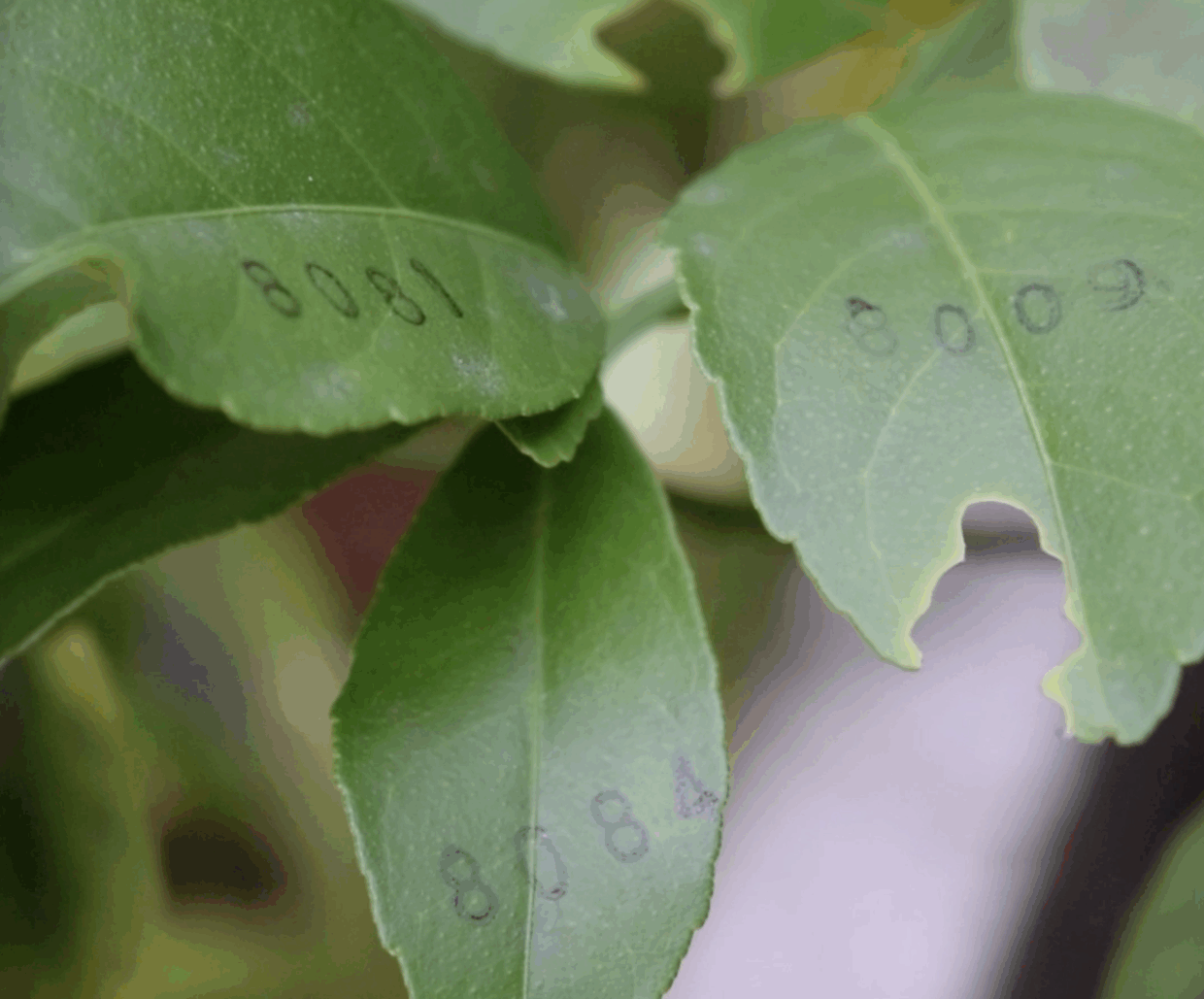
In this exhibition, we present works by Ukrainian artists curated by Nikita Kadan, a leading figure in contemporary Ukrainian artist who is also active as a curator. "Looking into the Gaps" is an exhibition series that focuses on the repeated gaps and discontinuities in Ukrainian history and art history. "Looking into the Gaps I" was held in Kyiv, Ukraine, in the summer of 2024, followed by "Looking into the Gaps II" in Dnipro, eastern area of Ukraine, in the summer of 2025. The current edition, "Looking into the Gaps III," began as a project in which Kadan personally carried works out of Ukraine and presented them abroad. Due to military service, wartime casualties, and restrictions on the departure of men of conscription age, many artists were unable to leave the country themselves. In July 2025, the works were exhibited for one day each in Poland and Germany. After a private outdoor presentation on Teshima Island, Kagawa Prefecture, in August 2025, the exhibition is now being presented publicly at Art Front Gallery. This exhibition series confronts historical gaps while attempting to reconnect Ukrainian art as a shared experience.
On February 24, 2022, the Russian Federation launched a full-scale invasion of Ukraine, and the country has remained in a state of war ever since. As many Ukrainian civilians volunteered to become soldiers, some artists also went to the front lines and lost their lives. Despite the extremely difficult circumstances in which cultural activities are forced to continue, artists persist in confronting reality through their creative practice and in raising their voices. Through Kadan’s perspective, this exhibition introduces the “now” of contemporary Ukrainian art born out of these harsh conditions. By selecting and presenting works by artists whom he deeply trusts and exhibiting them at Art Front Gallery, the exhibition aims to create a space that conveys the memories and pain carried by the people of Ukraine, as well as their hopes for the future.
On February 24, 2022, the Russian Federation launched a full-scale invasion of Ukraine, and the country has remained in a state of war ever since. As many Ukrainian civilians volunteered to become soldiers, some artists also went to the front lines and lost their lives. Despite the extremely difficult circumstances in which cultural activities are forced to continue, artists persist in confronting reality through their creative practice and in raising their voices. Through Kadan’s perspective, this exhibition introduces the “now” of contemporary Ukrainian art born out of these harsh conditions. By selecting and presenting works by artists whom he deeply trusts and exhibiting them at Art Front Gallery, the exhibition aims to create a space that conveys the memories and pain carried by the people of Ukraine, as well as their hopes for the future.
| Opening hours | Wed ~ Sun, Public holidays 11AM ~ 5PM |
| Closed days | Mon and Tue |
| Event | Section 1【Video Work Screening】 Co-organized by Waseda University February 6, 2026 (Fri.), 18:30- Screening of "The Gray Earth" by Dana Kavelina (23 min) *In the first approximately 20 minutes, Professor Wakana Kono of the School of Education, Waseda University (Department of Transcultural Studies), will give a talk on the current state of Ukrainian art. Section 2【Talk Event】 Co-organized by Waseda University February 6, 2026 (Fri.), Nikita Kadan (Artist, Curator)×Dana Kavelina (Artist)×Fram Kitagawa (Chairman of Art Front Gallery) *Languages: Japanese and Ukrainian (consecutive interpretation into Japanese) *Dana Kavelina, who was originally scheduled to participate in the event, will unfortunately be unable to travel to Japan due to unforeseen circumstances and has therefore had to cancel her appearance. We appreciate your kind understanding. We sincerely apologize, but due to the venue reaching full capacity, we have closed registration for on-site attendance. If you wish to view the archived video, please apply via the URL below. https://forms.gle/aos8Kxsa53NAgBL57 |
Exhibition Highlight


Curator's comment
Nikita KadanArtist, curator
‘We generally didn't like to look into the distance. Rather, to the side, into the gap. Like the perspective of pretty streets that always diverge perpendicularly. We didn't interpret, we didn't even ‘practice’, we just wandered around.’
— Yuri Leiderman, “Those Who Wandered in the Surf”
The history of Ukrainian art is a torn history and, at the same time, a history of gaps. Interrupted narratives, destroyed works, repressed authors, loud silence, rewriting the past according to the new dominant ideology, tragedies of conformism and virtuosity of self-justification, breaking oneself over the knee, changing sides in the middle of an argument, changing names halfway through, dissociative identity. Or martyrdom through self-immolation, followed by turning the ashes into bronze. And bronze is known to steal the meaning from ashes every time.
Is it possible to wander the landscape of catastrophe? Are there flankers in the bloody lands? The answer to this exhibition is affirmative.
The dignity of living on the periphery, without an eager gaze directed to the centre, to the metropolis. The lack of any certainty about one's own historical prospects. Leiderman speaks of ‘Ukrainian horizontal kinship, non-hierarchical ties’ and ‘a number of cultural provinces - Kyiv, Odesa, Lviv, Kharkiv - that do not need a centre, they just stand side by side’. Art in the provinces can be ‘elusive Joe’ (1) while in the metropolis it turns into career springboards or monumental columns and towers of ‘big culture’.
But the province is also the cradle of madness. Ideas that in more central places could turn into unshakable pedestals for their creators here become the clamorous garb of a urban madmen. Something like Tetianych's (2) spacesuits made of garbage and foil.
Let's imagine a museum, one of the Ukrainian museums, where a seemingly chaotic collection of artworks turns into a clear history of gaps of the logics that could otherwise unite and historicise these works. Where the lack of connection between historical situations makes the present fluid, unreliable and extremely open.
What to do when your native periphery suddenly becomes a place where the fate of the world is decided? And an even more complicated question: what if it suddenly ceases to be this place?
This exhibition is about the ways of looking at art, determined by the terrific and funny circumstances of Ukrainian life. This exhibition can be read as a project of a museum in which the desire to claim power through writing history has already failed. Or as an unstable system in which “classical," “contemporary," “marginal," "popular" authors find themselves outside their usual niches and positions in the classification. Like a moving landscape of art that instantly makes any map obsolete. Or as a story about the stolen past, recreated by its shadows and echoes - with full readiness for these shadows and echoes to deceive you and lead you astray.
This chapter of the exhibition is dedicated to those who create art in conditions that are close to impossible. Times of full-scale war divide both society as a whole and the art community into groups with different and unequal opportunities. While the gender aspect of this division is well known, many more subtle differences often escape global attention, yet they influence the international image of Ukrainian art just as concretely. It is widely known that men are subject to military mobilization and can only leave the country with hard-to-obtain short-term permits from the authorities, although artists who do not receive such permits often remain undeservedly outside the international spotlight. However, the scheme according to which women are internationally mobile and men must remain in the country does not describe all aspects of what is happening. The existence of female artists who are military personnel or artists who remain outside Ukraine during the war often goes unnoticed amid the glut of information about the Ukrainian war that filled the global media for a while but is gradually receding, unable to withstand long-term competition in the modern “attention economy.” The fact that there are volunteer artists, artists who have been forcibly mobilized into the army, and artists who are not allowed to leave the country due to bureaucratic restrictions—all these factors influence how the world sees Ukrainian art. but in themselves they appear to the world as unnecessary complications in an already difficult-to-understand picture of the relationship between war and art.
“Looking into the Gaps III” showcases artists whose works are carried out in wartime conditions and in spite of the restrictions imposed by war: military artists and civilian artists who are unable to travel. A separate section of the exhibition features works that examine the situation of Ukrainian military personnel and veterans—works in which acts of care and the fight against oblivion are presented as alternatives to the construction of a “heroic myth.”
ーーーーーーーーーーーーーーーーーーーーーーーーーーーー
1. A metaphor for people, things, etc., that no one wants to have anything to do with.
2. Fedir Tetianych (1942-2007) Ukrainian artist. During the Soviet era, he worked as an unofficial artist. He envisioned his own universe and performed actions wearing costumes made from aluminum foil and trash.
— Yuri Leiderman, “Those Who Wandered in the Surf”
The history of Ukrainian art is a torn history and, at the same time, a history of gaps. Interrupted narratives, destroyed works, repressed authors, loud silence, rewriting the past according to the new dominant ideology, tragedies of conformism and virtuosity of self-justification, breaking oneself over the knee, changing sides in the middle of an argument, changing names halfway through, dissociative identity. Or martyrdom through self-immolation, followed by turning the ashes into bronze. And bronze is known to steal the meaning from ashes every time.
Is it possible to wander the landscape of catastrophe? Are there flankers in the bloody lands? The answer to this exhibition is affirmative.
The dignity of living on the periphery, without an eager gaze directed to the centre, to the metropolis. The lack of any certainty about one's own historical prospects. Leiderman speaks of ‘Ukrainian horizontal kinship, non-hierarchical ties’ and ‘a number of cultural provinces - Kyiv, Odesa, Lviv, Kharkiv - that do not need a centre, they just stand side by side’. Art in the provinces can be ‘elusive Joe’ (1) while in the metropolis it turns into career springboards or monumental columns and towers of ‘big culture’.
But the province is also the cradle of madness. Ideas that in more central places could turn into unshakable pedestals for their creators here become the clamorous garb of a urban madmen. Something like Tetianych's (2) spacesuits made of garbage and foil.
Let's imagine a museum, one of the Ukrainian museums, where a seemingly chaotic collection of artworks turns into a clear history of gaps of the logics that could otherwise unite and historicise these works. Where the lack of connection between historical situations makes the present fluid, unreliable and extremely open.
What to do when your native periphery suddenly becomes a place where the fate of the world is decided? And an even more complicated question: what if it suddenly ceases to be this place?
This exhibition is about the ways of looking at art, determined by the terrific and funny circumstances of Ukrainian life. This exhibition can be read as a project of a museum in which the desire to claim power through writing history has already failed. Or as an unstable system in which “classical," “contemporary," “marginal," "popular" authors find themselves outside their usual niches and positions in the classification. Like a moving landscape of art that instantly makes any map obsolete. Or as a story about the stolen past, recreated by its shadows and echoes - with full readiness for these shadows and echoes to deceive you and lead you astray.
This chapter of the exhibition is dedicated to those who create art in conditions that are close to impossible. Times of full-scale war divide both society as a whole and the art community into groups with different and unequal opportunities. While the gender aspect of this division is well known, many more subtle differences often escape global attention, yet they influence the international image of Ukrainian art just as concretely. It is widely known that men are subject to military mobilization and can only leave the country with hard-to-obtain short-term permits from the authorities, although artists who do not receive such permits often remain undeservedly outside the international spotlight. However, the scheme according to which women are internationally mobile and men must remain in the country does not describe all aspects of what is happening. The existence of female artists who are military personnel or artists who remain outside Ukraine during the war often goes unnoticed amid the glut of information about the Ukrainian war that filled the global media for a while but is gradually receding, unable to withstand long-term competition in the modern “attention economy.” The fact that there are volunteer artists, artists who have been forcibly mobilized into the army, and artists who are not allowed to leave the country due to bureaucratic restrictions—all these factors influence how the world sees Ukrainian art. but in themselves they appear to the world as unnecessary complications in an already difficult-to-understand picture of the relationship between war and art.
“Looking into the Gaps III” showcases artists whose works are carried out in wartime conditions and in spite of the restrictions imposed by war: military artists and civilian artists who are unable to travel. A separate section of the exhibition features works that examine the situation of Ukrainian military personnel and veterans—works in which acts of care and the fight against oblivion are presented as alternatives to the construction of a “heroic myth.”
ーーーーーーーーーーーーーーーーーーーーーーーーーーーー
1. A metaphor for people, things, etc., that no one wants to have anything to do with.
2. Fedir Tetianych (1942-2007) Ukrainian artist. During the Soviet era, he worked as an unofficial artist. He envisioned his own universe and performed actions wearing costumes made from aluminum foil and trash.
Featured Artists
Nikita Kadan
[Participating as a curator]
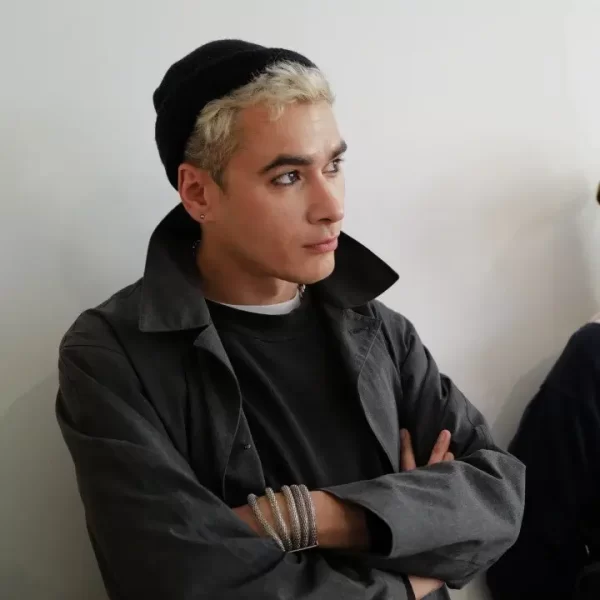
Nikita Kadan, a leading figure in contemporary Ukrainian art, graduated from the National Academy of Fine Arts and Architecture in Kyiv in 2007. Working across various media including painting and installation, he has received numerous awards such as from the PinchukArtCentre, and has presented his works at major international exhibitions including the Istanbul Biennial and the Venice Biennale in 2015, as well as the Busan Biennale in 2018.
For Kadan, history and art history serve as essential sources of creation and reflection. In 1991, when he was eight years old, the Soviet Union collapsed and Ukraine gained independence; however, how to confront and engage with the history and memory of the Soviet era remains an ongoing challenge for the artist. Since Russia’s annexation of Crimea in 2014, war has also become a central theme of his practice. Kadan transforms the raw realities of conflict into works of quiet intensity, at times employing symbolic approaches to distill and elevate the experience of war.
Nikita Kadan, a leading figure in contemporary Ukrainian art, graduated from the National Academy of Fine Arts and Architecture in Kyiv in 2007. Working across various media including painting and installation, he has received numerous awards such as from the PinchukArtCentre, and has presented his works at major international exhibitions including the Istanbul Biennial and the Venice Biennale in 2015, as well as the Busan Biennale in 2018.
For Kadan, history and art history serve as essential sources of creation and reflection. In 1991, when he was eight years old, the Soviet Union collapsed and Ukraine gained independence; however, how to confront and engage with the history and memory of the Soviet era remains an ongoing challenge for the artist. Since Russia’s annexation of Crimea in 2014, war has also become a central theme of his practice. Kadan transforms the raw realities of conflict into works of quiet intensity, at times employing symbolic approaches to distill and elevate the experience of war.

Anton Saenko
Born in 1989 in Sumy, former Soviet Union (now Ukraine), he graduated from the National Academy of Fine Arts and Architecture in Kyiv. He works across a wide range of media, including painting, land art, performance, and installation. In his artistic practice, “space” is treated as an important and recurring theme.

Bohdan Sokur
Born in 1994 in Cherkasy, Ukraine. He graduated from the Dragomanov National Pedagogical University in 2017. Through paintings and video works depicting everyday scenes of post-socialist countries, he reconstructs spaces of personal memory. He is currently serving in one of the attack and defense units of the National Guard of Ukraine.
Dana Kavelina
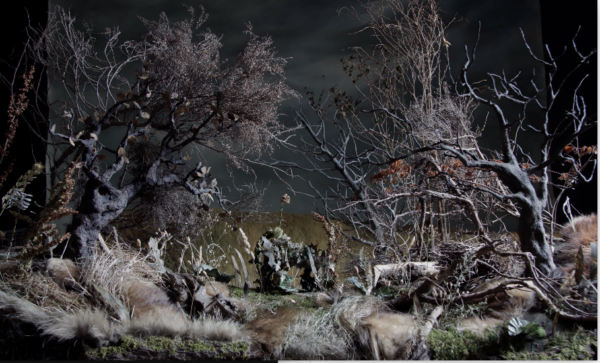
Born in 1995 in Melitopol, Ukraine. Graduated from Kyiv Polytechnic University. She works primarily with animation and video, while also employing installation, painting, and graphic techniques. Her practice examines military violence and war from the perspective of the victim, exploring the dissonance between history and individual trauma and memory.
She has participated in The Kyiv Perennial (Vienna), the 60th Venice Biennale, and other international exhibitions. She is also the recipient of the 7th PinchukArtCentre Prize.
She has participated in The Kyiv Perennial (Vienna), the 60th Venice Biennale, and other international exhibitions. She is also the recipient of the 7th PinchukArtCentre Prize.
Illia Todurkin
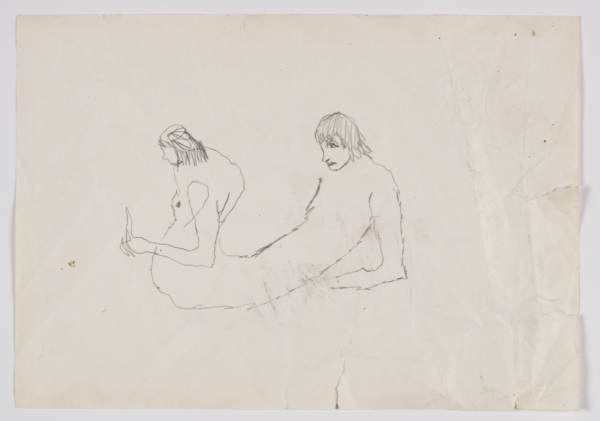
Born in 2000 in Mariupol, Ukraine. He is known for his use of diverse and innovative materials and techniques, creating works across a wide range of media including drawing, painting, and monotype prints. His artistic expression has been profoundly shaped by the harsh experiences he has faced since childhood, including illness, multiple surgeries, depression, and suicidal ideation.

Igor Makedon
Igor Makedon graduated from Taras Shevchenko National University of Kyiv and also studied at Central Saint Martins, University of the Arts London. He works across a wide range of media, including photography, sculpture, video, installation, graphics, and new media. In addition to numerous exhibitions in Ukraine, his work has been shown in the United States, the United Kingdom, Italy, and France, and has been featured in magazines such as Vogue, Forbes, and Men’s Health. The central themes of his practice are human behavior and the relationship between individuals and the realities that surround them. He is currently based in Kyiv.
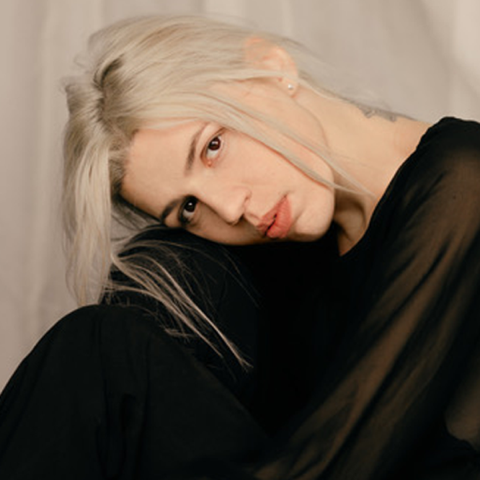
Marta Syrko
Born in 1995 in Lviv, Ukraine, she studied at the Lviv National Academy of Arts. Working primarily with photography while employing a wide range of media and techniques, her practice explores art history, social issues, and the human body. Her portrait photography in particular examines identity, the body, and the relationship between war and humanity, illuminating the diversity of human experience. She has participated in exhibitions in Ukraine as well as in Paris, London, and Arles. In 2025, she was selected by Forbes as one of the “10 Women Who Are Preserving and Shaping Ukrainian Art and Culture.” She is the recipient of the Emerging Talent Award 2024 and the International Photo Awards (First Prize).
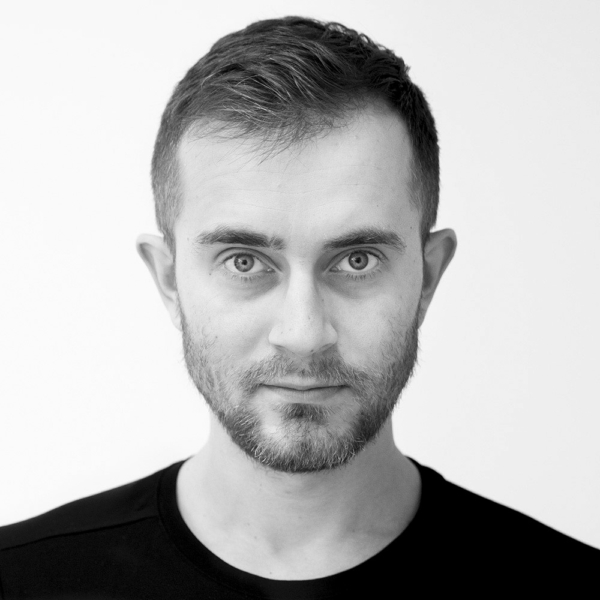
Mykhaylo Palinchak
An independent Ukrainian documentary and street photographer. Born 1985 in Uzhhorod, Ukraine. Residing and working in Kyiv, Ukraine. Master degree in International Economics of the Institute of International Relations of Kyiv National University. He has pursued photography since 2008. Since 2012 member of Ukrainian Photographic Alternative (UPHA) and member of Ukrainian Association of Professional Photographers (UAPP) since 2014. In 2014 - 2019 he was an official photographer of the President of Ukraine. Founder of 'Untitled' magazine and co-founder of Ukrainian Street Photography group. Member of PEN Ukraine since 2022. Author of the photo book "Anamnesis" (2020) and art-book "Maidan Faces" (2020). He works alongside the military and continues filming on the front lines.
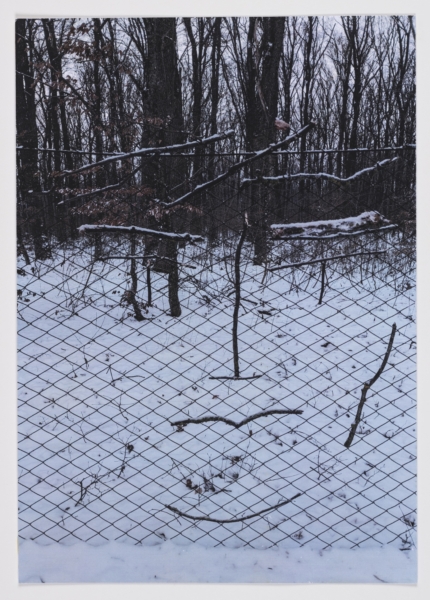
Oleh Perkovsky
Born in 1984 in Kamianets-Podilskyi, former Soviet Union (now Ukraine). He works with video, graphics, painting, and installation, and is one of the founding members of ”Open Group," which curated the Ukrainian Pavilion at the 2019 Venice Biennale. His practice explores themes such as nature, architecture, time, and the notions of presence and absence. Currently serving in the military.
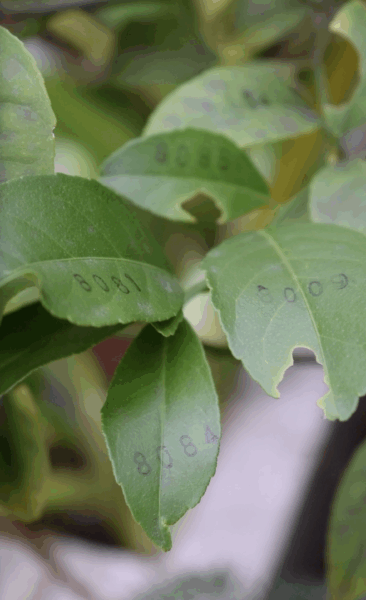
Pavlo Kovach
Born in 1987 in Uzhhorod, former Soviet Union (now Ukraine). He graduated from Uzhhorod Art College and the Lviv National Academy of Arts. Since 2012, he has been a co-founder and member of "Open Group," and has participated in the 56th and 60th Venice Biennale, the 8th Yokohama Triennale, among others. He is currently serving in the military and is engaged in registering soldiers who have been killed in action or reported missing.

Vladislav Plisetsky
Born in 1999 in Kyiv, Ukraine. Based at the Kyiv art center “Kyiv club Otel,” he works across a wide range of genres, presenting performances and solo exhibitions in urban spaces. His practice spans various media, including video, performance, costume design, and styling. Currently serving in the military.
Margarita Polovinko
[Exhibited only on Teshima]
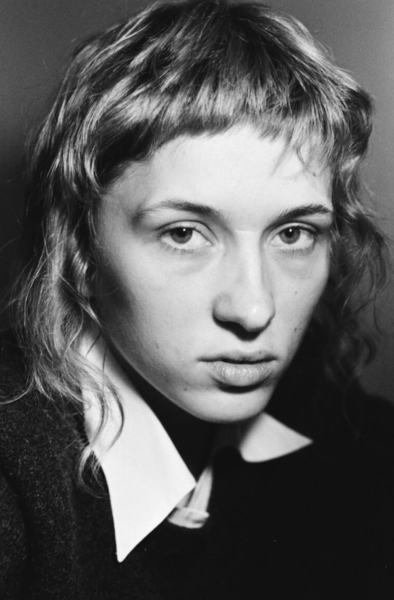
Marharyta Polovinko – born on March 24, 1994, in Kryvyi Rih, Ukraine. From 2012 to 2015, she studied at the Dnipro Theater and Art College in the Department of Fine Arts, specializing in easel painting. In 2019, she graduated from NAOMA with a degree in easel painting. Since 2022, she has been an active volunteer and worked on medical evacuation at the front of the Russian-Ukrainian war. After publishing a text on Secondary Archive, at the end of 2024 she joined the Armed Forces of Ukraine. She died on April 5, 2025, on the battlefield.
Marharyta Polovinko – born on March 24, 1994, in Kryvyi Rih, Ukraine. From 2012 to 2015, she studied at the Dnipro Theater and Art College in the Department of Fine Arts, specializing in easel painting. In 2019, she graduated from NAOMA with a degree in easel painting. Since 2022, she has been an active volunteer and worked on medical evacuation at the front of the Russian-Ukrainian war. After publishing a text on Secondary Archive, at the end of 2024 she joined the Armed Forces of Ukraine. She died on April 5, 2025, on the battlefield.
Oleksiy Say
[Exhibited only on Teshima]
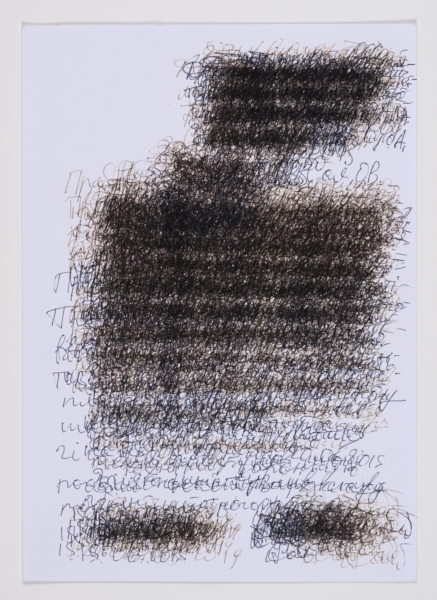
Born in 1975 in Kyiv, Ukraine. He graduated from the National Academy of Fine Arts and Architecture in Kyiv in 2001. Working across a wide range of media, he is widely known for his self-developed practice of “Excel art.” In addition to this, he produces installations, art objects, digital art, and graphic works.
Born in 1975 in Kyiv, Ukraine. He graduated from the National Academy of Fine Arts and Architecture in Kyiv in 2001. Working across a wide range of media, he is widely known for his self-developed practice of “Excel art.” In addition to this, he produces installations, art objects, digital art, and graphic works.
Yuri Leiderman
[Exhibited only on Teshima]
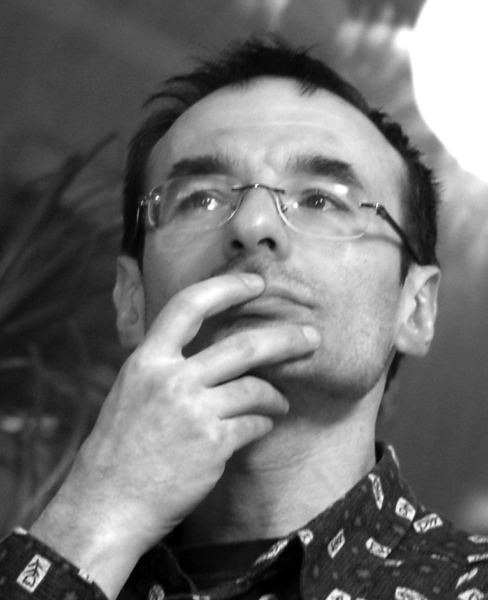
Born in 1963 in Odesa, former Soviet Union (now Ukraine). Artist and writer. He graduated from the D. Mendeleev Moscow Institute of Chemical Technology. From 1982, he participated in apartment exhibitions in Moscow and Odesa as an unofficial artist. In 1987, he became one of the founding members of the Moscow-based artist group ”Medical Hermeneutics", which he left in 1990.
He has participated in the Venice Biennale (1993, 2003), the 1st Manifesta (1996), the Istanbul Biennial (1992), among others. In 2005, he received the Andrei Bely Prize for Literature. Since 2005, he has collaborated with Andrei Silvestrov on the film project "Birmingham Ornament." "Birmingham Ornament II" (2013), which received the Jury Special Award in the “Cinema of the 21st Century” section at the Rome Film Festival, was also screened at the Echigo-Tsumari Art Triennale (2024).
He is currently based in Berlin.
To be added sequentially
Born in 1963 in Odesa, former Soviet Union (now Ukraine). Artist and writer. He graduated from the D. Mendeleev Moscow Institute of Chemical Technology. From 1982, he participated in apartment exhibitions in Moscow and Odesa as an unofficial artist. In 1987, he became one of the founding members of the Moscow-based artist group ”Medical Hermeneutics", which he left in 1990.
He has participated in the Venice Biennale (1993, 2003), the 1st Manifesta (1996), the Istanbul Biennial (1992), among others. In 2005, he received the Andrei Bely Prize for Literature. Since 2005, he has collaborated with Andrei Silvestrov on the film project "Birmingham Ornament." "Birmingham Ornament II" (2013), which received the Jury Special Award in the “Cinema of the 21st Century” section at the Rome Film Festival, was also screened at the Echigo-Tsumari Art Triennale (2024).
He is currently based in Berlin.
To be added sequentially